Review: How To End Your Internship The Right Way

Note: These article reviews are being completed for my PR Campaigns class; however, I feel as though these PR articles are too interesting not to share. I hope you learn as much from them as I did! Links to the articles are provided below.

Quilty, A. (2014, Aug. 29). “How to end your internship the right way.” PR Daily. Retrieved 1 Sept. 2014 from http://www.prdaily.com/mediarelations/Articles/17177.aspx

As a student who just completed a summer internship, the PR Daily article of “How to end your internship the right way” caught my eye. Looking at the list, I realized that I still needed to wrap some elements up.

The author, Allison Quilty, gives five tips on how to end your internship the right way. First of all, she states that the student should pursue some type of feedback. We’ve heard for years that the best way to learn is to accept constructive criticism, right? Pursuing your intern coordinator or employer for helpful feedback may give you the ability to address a weakness or capitalize on a strong suit. Understanding your work from a third party perspective could increase your value when you market yourself for a salaried career.

The second suggestion is essential for any communication student hoping to make it in the industry – stay connected! I shook many hands this summer, many of these belonging to people much more important in the business than I, who will most likely forget my name. As a matter of fact, one of the CEOs only knows me as “the intern with purple tights.” These connections are invaluable, and networking opportunities seem to fall hand in hand with internships. Don’t lose these relationships once your time ends; the article suggests collecting business cards or connecting on LinkedIn is a great way to stay in touch.

Quilty’s third recommendation is one that I faced myself – tie up loose ends. It’s the last week of your internship, your intern hours are well over their requirement, and you’re still working on something important for your boss. What do you do? I suggest, and Quilty seems to agree, that you complete your part in whatever task you’ve been given. Although it may be inconvenient for you, this will be what sets you apart in the employer’s mind. If you go the extra mile, you will be the one who takes the position. If it’s a large project, detail the process for the next person who will be taking it on. Making that transition easier for a coworker will show that you are a team player.

The fourth proposition Quilty makes is to ask for a recommendation. In reading this article, I realized that this was one thing I did not do. If you’ve worked closely with someone for an internship and feel as though you’ve contributed valuable work, take that next step and ask if he or she would be willing to put in a good word for you. Now, LinkedIn makes this easier for an employer, as he or she can write a small paragraph about how spectacular you are that anyone can see on your profile. It’s as simple as asking in a polite email. Having this “proof” from your supervisor shows your value or asset to the company, and looks good to the next boss.

Finally, Quilty’s fifth piece of advice is to say thank you. Just as we are learning and as our textbook states, PR is about building relationships. Beyond making a new networking connection on LinkedIn, show that you are grateful for the internship opportunity by thanking those who took the time to help, teach, and guide you in your venture. A thank you can be a handwritten card, or an email – but these are the things that people will remember in the future.

In retrospect, all of these tips that Quilty shares are ones we may think of as common sense; however, I know that I forgot to specifically address a few of these elements among the overwhelming amount of material that came with my internship. As I mentioned previously, I think the two most important aspects of this article are maintaining the networking contacts and building relationships. Paralleling the “rationalist management” orientation of public relations, creating and cultivating relationships in the early stages of a career, i.e. in the internship phase, will only benefit you in the future.

Review: 7 Media Relations Rules You Might Want To Break

Note: These article reviews are being completed for my PR Campaigns class; however, I feel as though these PR articles are too interesting not to share. I hope you learn as much from them as I did! Links to the articles are provided below.

Crenshaw, D. (2014, May 09). “7 media relations rules you might want to break.” PR Daily. Retrieved 27 Aug. 2014 from http://www.prdaily.com/Main/Articles/16527.aspx

The title of this article caught my eye. As PR students, we are taught these structured sets of do’s and don’t’s that we hope will bring success to our PR endeavors in the future. This article, however, addresses the gray areas of PR – and the idea that some of the rules should be bent or broken in order to create a more effective campaign or impression.

Dorothy Crenshaw’s first rule-to-be-broken is that you should forbid your client from saying, “No comment.” If a company spokesperson is uninformed about an issue and does not have the chance to understand all of the facts of the matter, it would be unproductive and perhaps even hurtful for the company to give false information to the press. In this regard, it’s appropriate to refrain on a response to the media.

Her following rule is to leave journalists alone unless you have a newsworthy issue to bring to their attention. Although this generally is the case, utilizing other news that may not be your own (newsjacking) in conjunction with your client’s perspective could provide an interesting point of view to the article. In this case, you could bother the journalist with a twist to a current story, if it is in the best interest of your client.

Crenshaw’s third rule-to-be-broken addresses the idea that a story, product or service must be special or notable to be considered valuable in the media world. This is not so much the case in our current society – few ideas are completely original. She addresses the concept that although you may not have something that stands on its own, a combination of two products or ideas could be considered a broader category that interests your public.

This summer, I worked at a PR firm where much of the focus was on tailoring the message specifically to the individual to which it pertained. Crenshaw’s fourth rule-to-break is that your story should be thrown out widely to as many people as will listen. This is something I have been specifically taught against during my time at Austin Peay. We learn that PR should be targeted and intentional. Using software like Vocus allows a PR professional to look specifically at whom he or she would like to reach, as well as the beat of reporters or subject area of editors. If the net is cast widely, chances are the story will be disregarded by many of the recipients. You also could end up with the negative effect of having an interesting story that is disregarded by the right people, because they’ve been bombarded with irrelevant messages from you in the past.

Crenshaw’s fifth rule to break is one that I believe should have more emphasis in the world of PR. This states that by training your company spokesperson, you are guaranteed to get the message across. Unfortunately, there are times that a speaker is not meant to be in front of the media. A PR pro does not want their company spokesperson to sound insincere, overly commercial, or fake in their responses. This would definitely take a toll on the effectiveness of the message, and could even hurt them or their reputation as the public could deem a hesitant speaker as dishonest.

The sixth rule-to-break is one I also had some experience with this summer; Crenshaw writes that the PR person should be making it happen in the background. I worked with a very “upfront” PR professional. She believed her presence was necessary at every city commissioner meeting, ribbon cutting, and company event. In having her presence at the forefront of company events, she built a much more successful relationship with the company’s executives, and they felt confident that she knew what she was talking about. In providing that level of support – in essence, the feeling that if something happened, she would be ready – my boss increased her own value to the company. Isn’t that what it’s about?

Finally, Crenshaw’s seventh rule-to-break is that whenever you are in doubt about the media’s perception of your event, issue or story – hold a press conference. This is unrealistic for many companies, as a press conference may not achieve the desired result. Press conferences have the ability to be successful, but often times they cost the client much more than they are worth. Instead of automatically leaning on the idea that journalists will be attracted to a press briefing, Crenshaw suggests that a company pursues a strategic media approach – where the message can be tailored and intentional.

This article was very interesting because it somewhat goes against what we are taught as students. As our class focuses on the strategic elements of PR campaigns, I’m sure that we will take more time to examine how different plans of action will be relevant in various circumstances; there is not a cookie-cutter answer to fit all companies’ problems. I believe that there is no absolute right answer as to how to approach a client’s issue, and it will take some adjustment of these PR “rules” to come up with an individualized, effective plan to bring success to your client.

Review: 5 PR Lessons From Fantasy Football

Note: These article reviews are being completed for my PR Campaigns class; however, I feel as though these PR articles are too interesting not to share. I hope you learn as much from them as I did! Links to the articles are provided below.

Manocchio, A. (2014, Aug. 26). “5 PR lessons from fantasy football.” PR Daily. Retrieved 27 Aug. 2014 from http://www.prdaily.com/mediarelations/Articles/17144.aspx

In honor of the ever popular Fantasy Football season, I chose my article review to be based on Alexa Manocchio’s “5 PR Lessons From Fantasy Football.”

This article wittily compares PR to the lessons learned from fantasy football using sporty terms and team analogies. First of all, she states that it is important for a PR person to “know his/her stats.” Just like in football, there are people that are incredibly skilled in certain areas of their work and others who may be better doing another task. In understanding the people with whom you work, you can be effective in your message by doing your research. This can apply to both people and publications.

Targeting your message to a specific beat reporter will most likely be much more successful than giving a generalized release to a wide variety of people. Along the same lines, be intentional in your publication choice. What will be the most beneficial to your client? What has worked in the past? In understanding the “stats” of those with whom you’re dealing, your PR strategies will be much more effective.

Manocchio’s second fantasy football lesson is that you could “lose on any given Sunday.” This addresses the idea that in PR, you can have an upset/incident regardless of how prepared you are. Things will occasionally happen. If something unforeseen occurs, your energy needs to be refocused into learning from the mistake and addressing the issue in the future.

The third lesson the author gives is one that is especially relevant to our communication strategies today – “stay up to the minute.” There are constantly things happening in the world of communications – be it mergers, events, crises, or huge stories. If you do not stay engaged, or on top of what is going on in the world around you, you (and your client) may miss out on the chance to be included. Staying current with what is happening in the industry will not only benefit your clients and their best interests, but also will allow you to be more effective in your public relations – making you a much more valuable asset.

The fourth fantasy football lesson that we’re given is based on the importance of interactivity. People do not want to feel as though they are bystanders to the action. A great (and unintentional) example of the importance of interactivity can be seen with the recent spike in donations to ALSA via the ice bucket challenge. People want to have the chance to take part in something where they feel as though they are needed, they are valued, and they make a difference. PR campaigns that engage the public are generally much more successful than those with a side-lined audience. With the introduction of interactivity, the PR effort is much more targeted and intentional, allowing the company to better engage customers.

Finally, Manocchio’s fifth fantasy football lesson is that “collaboration leads to wins.” This plays somewhat into the first lesson, as understanding the strengths and weaknesses of those with whom you work will make your end result much more successful. Collaboration brings fresh ideas, thorough plans, and new perspectives that may be otherwise overlooked. This also could be collaboration with your client; understanding the company’s goals and desires for the campaign will give insight on how to address it strategically. When each of these individual elements are given attention, the communication is directed toward the end goal.

I thought that this article made a lot of great points. It is important to address that much of PR is based in thoughtful, well-researched, calculated and strategic decisions rather than rash choices. Staying current is especially crucial, as there are constant decisions and opportunities that affect the choices you would need to make for a client. In conjunction with staying in-the-know comes the concept of interactivity. A good PR person would see the effects/success of an interactive PR campaign (because they did their up-to-the-minute research!) as compared to one that did not engage the audience; he or she could choose a course of action from this point. In this way, all of these elements are interwoven when considering how to build a successful PR campaign.

The Quirks of An Overachiever

I’ve been an overachiever since first grade. We had a “Reading Raceway” track on the wall, where you moved a little car around a colorful wheel based on how many books you read. You better believe my little car was always the first in line, and I would read and read just to keep up my lead.

See, it started early. I’ve always had a desire to prove my competence. Throughout my school years, I read extra, wrote extra, worked longer, and edited more. I was THAT kid. It was not something of which I was proud. I would never, ever share my report cards like some other kids. I’d cover up test scores, ruin curves, and be ashamed of papers I did really well on. And, looking back, that’s not how I should’ve felt.

I’ve deliberately tried to overcome this overachieving nature. I have fought against it throughout my entire college career, specifically trying to procrastinate on papers and give someone else a chance to lead the group project. When a 6-8 page paper I wrote turned into a 25 page one, I realized even I couldn’t overlook how sickeningly overachieving I am.

But, I’ve come to accept that this is who I am. I live and die by my planner, I write way too much, and I pick out spelling mistakes in publications. It’s just who I am.

These are some overachieving quirks I’ve come to realize about myself.

1. Overachieving means you plan things way earlier than normal people, so much so that no one can plan a meeting with you because they don’t know where they’ll be in May of 2015.

I live and die by my planner. I will not remember anything unless it’s been written in my beloved book. I once said that if my planner was thrown over a bridge, you may as well throw me over as well. And, it may be color coordinated. Don’t judge.

2. People will be angry at you for your overachieving. You’ll just have to get over it.

Yes, I may suck up occasionally by contributing my best work. However, it would be more work for me to not try than it would be for me to overachieve – so just let me be a pain in the ass. Besides, you could overachieve if you really wanted to.

3. Overachieving doesn’t need to come across as bossy.

I’ve had to work on this. It’s difficult to try and take a leadership position, wanting to accomplish something, without someone feeling as though you’re trying to take all the control. However, it’s possible to overachieve in a group setting without being bossy. First of all, you have to be open to the ideas of others. Often times, overachievers have a specific way of doing something that seems to them as the most efficient route. However, a good leader listens. Maybe you can overachieve in other ways. Secondly, acknowledge that you do not know it all/cannot do it all, and delegate. Don’t overachieve alone.

4. You cannot control the actions of others.

Kinda goes along with the last one, eh? This has been particularly frustrating for me when it comes to timeliness. I like it when people are on time, and I take it personally if someone skips a meeting with me. You cannot control what others are going to do, so don’t try. Brush it off, let it go, and overachieve elsewhere.

These are just a few things I’ve learned along my overachieving journey. Biggest thing? Don’t be overbearing. I do not know it all, nor do I necessarily have the best ideas. But, I will always do the maximum number of pages in a paper and I’ll always highlight in my planner and I’ll put a birthday sticker on your special day – these, I am not sorry for.

You’re Only As Awkward As You Think You Are

What have I learned as a PR intern? You’re only as awkward as you think you are.

If you know me, you’ll know that I am a self-proclaimed awkwardite who creates somewhat awkward situations unintentionally and often holds eye contact for that extra second where it becomes awkward.

As a communication student, however, it’s very important to have a certain degree of communication skills (literally, it’s a degree in communication) to be successful in your career. Here are a few tidbits of unconvential advice I’ve scraped together in my summer internship.

1. When you shake someone’s hand, especially the CEO of a company, don’t pull a wet noodle.

This has caught me off guard before. When you’re not mentally prepared for a handshake, you end up either putting your thumb in the wrong place – which gets REALLY weird – or you end up limply shaking their hand. Neither are positive things that demonstrate you’re a serious professional.

So, if you think about the handshake before diving in, it won’t catch you by surprise. Eye contact, firm (but not Hulk Hogan), and brief. Don’t force it; let it be a natural part of your communication. By the end of the summer, I finally had a good handshake. It takes time.

2. “See ya!” is not an appropriate way to say farewell at a work function, even if they’re around your age.

Boy was this a painful one for me. I thought about that “see ya” for weeks after it happened, cringing at the fact that I chose those words to leave a (not-so) lasting impression on communication professionals. I thought, why do I have to be so awkward? And, I exaggerated that scenario in my mind so much so that I pretty much concluded I should never speak again. You’re only as awkward as you think you are.

This is where the second chance comes in! I hope that you, also, will receive a second chance at the “see ya” nightmare. When I saw this same person again at a different meeting, I made sure that I left them with a pleasant, “Nice to see you again!” I’d also avoid the “Have a great life!” and “Catch ya on the flip side!” scenarios.

3. Even when you don’t think you’ll need an intern notebook, you’ll need an intern notebook.

I carried around a lined notebook for the first month and a half of my internship, and never cracked it open. Well, I think I may have doodled on the front cover at one point, but I never actually took notes. One day, I was heading to a meeting and thought, “Nah. I’ve never used that notebook before, and I’ll probably never need it again.” And, guess what was the first thing I was told? “Abbi, can you take some notes?”

I put myself in the awkward situation of having to say, “I don’t have any paper.” I didn’t even – the shame! – have a writing utensil because it was still attached to my notebook. Do not be the intern without paper! In addition, do not take notes on your cellphone. It looks like you’re texting, which in turn gives the impression that you’re not paying attention to what’s going on and not taking your job seriously.

4. Find the balance of introducing yourself to networking connections but not being an overbearing, desperate student.

This is a tough one. I’ve attended various meetings this summer with many people whose salaries are probably worth more than my life. I’ve met a few in passing, and some even remember who I am. “Aren’t you the girl that wore the purple tights?”

Once you’ve met someone, what is the appropriate relationship to have with them? I’ve spent my fair share of meetings waiting on the side for something to happen, someone to communicate with. And, in retrospect, this isn’t how it should work.

Obviously, I wouldn’t suggest waltzing up to the company President and asking him questions about his life while he’s in the middle of an interview. However, it’s okay for you to show interest. Ask how long she’s worked with the company, what he loves most about his job, or if he has any advice for an intern trying to make an impression. Generally, people want to be engaged in conversation instead of awkwardly standing around. I wish I would have figured this one out a little sooner in my internship.

5. Remember the name.

When you’re introduced, make an actual effort to remember to whom you are speaking. It will save you hours of unsuccessful internet searching. I met this woman at one of the meetings I attended who works in traffic engineering. She seemed genuinely interested in me and my work (and as an intern, you take what you can get!) and also happened to have a great professional fashion sense.

I met this woman probably on three separate occasions, and each time she remembered my name and reminded me of hers.

(Side bar: DO NOT ever act disinterested when someone is talking to you, even unintentionally. If they’re taking time to talk to an intern, you take that opportunity and you RUN WITH IT. WHOLEHEARTEDLY.)

Anyways, so I thought about this particular connection one night and realized I still had no idea what her name was – even though it had been spoken to me about four times in conversation. And, I very well couldn’t demonstrate to my supervisor that I had been irresponsible in my name-remembering! So, I did what any good 21st century communication student would do and googled everything I could remember about this woman.

Apparently the Google odds were not in my favor that evening, because I found absolutely nothing as to who she may be. Plus, it’s very difficult to find someone without their name to go on. Finally, I gave up.

Again, praise the Lord for second chances! I saw this same woman at a meeting I attended last night, and (without specifically addressing her by name of course) made some small talk. Then, miracle of miracles, I heard her introduce herself to someone else. You better believe I will NEVER forget that woman’s name.

Make it easy on yourself and just remember their name the first time. Don’t tune out that little section of the conversation, because it will bite you in the tushy later. I could’ve saved myself many an awkward, “I’m Amy, remember? We’ve met at the past three meetings?” if I just had taken the time to remember her name.

Aside from your own personal embarrassment, remembering someone’s name demonstrates that you are assigning value to who they are. If you care enough to make that connection, you need to care enough to remember the most basic information about who a person is.

These are five small things that have made a huge impact on my perception of communication in practice. If you are confident in who you are, and the skills you have to offer, you will be much more pleasant as an intern (and, a professional!). Don’t wait on the sidelines for the communication to come your way – pursue it yourself. After all, isn’t that what sets us apart?

The Joy of a Life Without Worry

I am a self-proclaimed worry wart. I am always worrying. Whether it’s about school, the future, my friends, my family, or worrying about the fact that I worry so much, my life has been a constant struggle of worrying about the past or worrying about the future – which is an incredibly unhealthy and unfulfilling way of life.

About six months ago, I decided that worrying was probably not the way I wanted to spend the next eighty years of my life. Not only does it take a toll on your emotions and burdens your heart, worrying mentally breaks me down – just think of all the brain power I’ve wasted!

My decision to live without worry came about as a sort of revelation to me that I didn’t actually need to be in control of my life. The age-old adage assumes that now (being your twenties) is the time for you to go and figure everything out and find your perfect job and your perfect match and plan ahead and start a family and live just like an adult should live. However, taking a step back from these worldly pressures, I’ve come to the conclusion that if at any point in my life I’m allowed to not have it all figured out, that time is now.

Living a life of worry stops us from experiencing the current moment, because we’re always hyper-aware of the future. If I’m always thinking about how my life will be five years from now, worrying that it may not be where I want it to be, I’ll be missing out on the present (which, ironically, I would probably end up worrying about how many years I spent worrying that I’ll never get back).

I found this Bible verse that really illuminated this revelation:

Matthew 6:27 NIV

“Can any one of you by worrying add a single hour to your life?”

Answer: Absolutely not. We dwell in these thoughts and anxieties hoping that they will change the outcome of our situations. In reality, our lives will not get any longer. These are the hours for creating relationships, making memories, living for the beauty of life – not to be wasted in a vicious and self-deprecating cycle of worry.

And the beauty of this story? We have the hope and reassurance that our lives are in the hands of Someone much, much more powerful than we are. Regardless of how much we worry about what’s going to happen, our paths are not our own.

What a relief, right? In making the decision to worry less, I’ve already felt a remarkably lighter load on my heart.

Plus, now I’ve got all this time, brain space and emotional room to devote myself to the things that really matter – like living whole-heartedly in the present.

PR in Sports: Lebron’s Letter in Sports Illustrated

As someone who doesn’t usually follow professional basketball, I wasn’t sure I’d be able to do this post justice. However, one thing in which I am confident is how public relations is used to effectively market individuals and businesses. NBA superstar and international sports icon Lebron James recently wrote an eloquent letter about his choice to rejoin the Cleveland Cavaliers that had PR professionals shaking their heads in awe.

In 2010, Lebron announced he’d be leaving Cleveland after seven seasons with the Cavs in a highly publicized ESPN interview. His major decision – which infuriated many – was broadcasted through an incredibly effective, trusted sports outlet. Everyone knew about the choice. I wasn’t even in the country at this point, much less a basketball fan, and I knew that Lebron was joining the Miami Heat.

Last Friday, James announced that he was coming back to Cleveland through a very personal, professional letter he released as told to Sports Illustrated’s Lee Jenkins. In the letter, he addressed his heart for Ohio, his decision in originally choosing Miami, as well as his choice to return to the Cavs. The letter is straight-to-the-point, low-key, and tells the audience exactly what they need to hear.

And, this letter was released through one of the most trusted print media sources for sports’ news. This reminds us: when you have crucial information to distribute -particularly when it affects numerous stakeholders – you should head towards packing a wallop with an incredibly reliable source.

This method of releasing information is very unlike the PR strategies of today. The letter is starkly different from James’ announcement in 2010 – no millions watching, no bombardment of questions, no chaotic circus of media frenzy.

Lebron’s letter was probably the smartest PR choice for his announcement. His letter addresses that he takes the move seriously, and plans to work hard in his new position. “I’m not having a press conference or a party,” the letter says. “After this, it’s time to get to work.”

The letter also demonstrates the athlete’s willingness to be transparent in the communication of his decision. He anticipated the arguments that his departure was based on tension with teammates, to which he responds: “I’m doing this essay because I want an opportunity to explain myself uninterrupted. I don’t want anyone thinking: He and Erik Spoelstra didn’t get along. … He and Riles didn’t get along. … The Heat couldn’t put the right team together. That’s absolutely not true.”

Finally, James grabs us with pathos. According to the letter, his return to the Cavaliers goes beyond his desire to play basketball. Instead, the choice focuses on what he calls his “responsibility to lead” – his desire to help shape the community into what he believes the future may hold.

Lebron combines factual information with an emotionally charged appeal. His choice to submit his decision via letter not only boosted the traffic to the Sports Illustrated site, but also allowed him to shape his words and opinions without the pressure of a media circus.

The lessons?

1. Give your audience what they want.

2. Be practical.

3. Be transparent.

4. Be strategic in your message.

Perhaps you too will garner over 35,000 Facebook shares.

11 Ways to Use Your Online Skills for Good

According to Yahoo! News, Americans spend on average 23 hours per week online – emailing, gaming, poking, prodding, crushin’ candy, blogging, farming, blocking, tumbling… you get the point. We spend an incredible amount of time in our digital society.

What if a fraction of this time was directed towards making a difference? In this post, I’ve included 10 different social action websites that are worth looking into. Do you have ten minutes to put your phone down? Did you know answering a trivia question allows you to (freely!) donate ten grains of rice? Having used a few myself, I can vouch for the simplicity of these good deeds.

And to think you just keep refreshing your Twitter feed.

1. DoSomething.org

This website is geared towards involving teens. It calls us to various campaigns – fighting sexism, cracking down on texting and driving, donating jeans for homeless teens, conserving water, even finding homes for shelter pets – simply by completing the challenges they suggest. And, if you take a picture of yourself completing that challenge, you’ll be entered into a $4000 scholarship drawing. Pretty simple, right?

One really great DoSomething challenge I participated in was sending a Valentine’s Day card to a lonely senior. DoSomething sent me an address, and all I had to do was make a card. This may sound like something small, but can you imagine the ripple effect of a million teens sending a million cards? It doesn’t cost anything, and it could make a huge difference in someone’s life.

2. FreeRice.com

This is a cool one! If you’re like me and your family is tired of hearing you yell out the answers to Jeopardy trivia, check out FreeRice.com. This website allows you to answer trivia questions and win rice. Yep, win rice. For every question you answer correctly, FreeRice sponsors will donate ten grains of rice to the World Food Programme. The site even keeps track of how many bowls, bags, and tons of rice you’ve generated with your trivia answers.

“But I’m awful at trivia!” LIES. We’re talking: “holy means: A) gentle B) not many C) accurate D) sacred” here people! You can even change your subject – humanities, geography, English, science, math… there is even SAT prep. Seriously.

This is a great site to play around on if you’re just laying in front of the television. Hardly any effort, and rice gets donated to hungry earthlings. Win-win. And, if you’re into this kinda thing, you can even form groups to work together or work your way onto the rice leader score board.

3. UNICEF Tap Project

I’m not going to lie to you, sometimes I think I may have a cellphone addiction. So, this UNICEF Tap Project is good for my soul – my desire for good outweighs my desire to refresh Instagram. The Tap Project is a smart phone campaign. For every ten minutes you don’t touch your phone (and believe me, it senses if you’re trying to sneak it – I’ve tried) you provide a child with clean water for the day. And, if you keep going, more and more children can have more and more clean water – something that is TRULY an essential.

Once you finally crack (just kidding, we know you have to take calls from your mom sometime) you can make a donation to UNICEF for as little as $5 – an amount that provides a child with clean water for 200 days.

This would be a great way to spend a dinner, whether it’s with your family or out to eat with your friends. Not only are you providing children with clean water – or multiple children, if everyone’s doing it at once – you’re also getting some real relationship time.

4. Apathy Is Boring

Canadians, this one’s for you! The Apathy Is Boring page invites Canadian citizens to immerse themselves in politics to be aware of what they’re supporting. Instead of being one of those people who kinda knows what’s going on, you can be the one that people always refer questions to at the dinner table. The site gives unbiased information on different political parties, allows you to make your very own “call to action” petition, and gives election reminders.

The page also encourages individuals to encourage the youth in their communities, providing training tools, videos, and media to bring up a generation of culturally-aware young’uns.

5. Earthjustice

Earthjustice is an international, non-profit law firm speaking up for our sweet Earth. This organization is dedicated to creating a healthy living environment for all people, protecting the Earth’s natural resources, and defending organizations such as the Wilderness Society at no cost.

So what can you do? The Earthjustice page allows individuals to get in on the action. The site shares information about the various projects on which they’re working and then creates petitions that you can sign, depending on how you feel about saving the coral reef. You can also subscribe to the Earthjustice page to keep up with what’s going on.

6. Groupon Grassroots

I know I love Groupon. Groupon Grassroots is like Groupon for social causes. You can create your own cause, find local causes around you, and choose where your loyalties lie. So far, Groupon Grassroots has kickstarted over 1500 campaigns raising over 8 million dollars in support. You can “purchase” donations to support campaigns you care about locally – many of which go directly back into your community. There’s even a Groupon Grassroots blog where you can tell your story, share your experience with an organization, or rally support for your passion. Grouponning for change, for the win.

7. PifWorld

Similar to Groupon Grassroots, PifWorld allows you to choose a cause you feel strongly about, donate or support this cause, and share the cause with your friends. However, it’s on a much broader scale. Instead of your local school, PifWorld allows you to support across oceans.

Essentially, it’s a platform that allows you to garner support for what you love. If there’s something you’d like to begin, start your own fundraiser and create a non-profit page. And, if you want, PifWorld will even tell your Twitter followers about it. There is a blog, but I can’t read Dutch.

8. Spot.us 

Communication majors unite! Spot.us is a website dedicated to community-funded reporting. The public works with Spot.us to choose topics that may be under-reported or overlooked, and this community of journalists with open hearts and sharp typing skills can pursue the story for themselves. Currently, the site has over 22,000 contributors and over 110 publishing partners.

This site is funded partially by American Public Media and partially the public, but is currently not accepting any new proposals or contributors. I’ll post more when Spot.us is refreshed!

9. Help From Home

Hopefully you’ve stuck with me this long, because this site is one of the coolest things I’ve ever stumbled across on the internet. Help From Home is a site based on the concept of microvolunteering – small volunteering projects performed by millions of people. 100% Pajama pant friendly. Help From Home lets you choose your choice of action. Do you want to play games that donate money to charity? Do you have a minute to send a free eCard? You can even put an add-on to your Firefox browser that’ll save printer ink –> paper –> trees (and indirectly money) and takes literally 30 seconds.

There are hundreds of these little tasks that allow you to volunteer from your bed at virtually no cost to you, taking anywhere from 30 seconds to 30 minutes. Of course, donating to your favorite cause is always an option.

10. Kiva

Whoever came up with Kiva is brilliant. You’re looking at a site that empowers people globally through as cheap as a $25 loan. How does it work? You lend to someone in need, and when they reach their goal, they pay you back. It’s beautiful.

Let me share an example:

Elena is a 42-year old widower from the Philippines. She is looking for a loan of $350 to restock her small store with basic commodities so that she can provide for her four children. She is 7% on the way to her goal – someone’s already donated $25 to her cause. Kiva provides a repayment schedule, and Elena works towards saving up for future consumption so that she can build a sustainable lifestyle for herself and her kids. If you’d like to donate to Elena’s Kiva loan, click here.

If you have $25 sitting in a bank account somewhere that you could share with someone in a third world country, Kiva is definitely the route to go. And, you get to become a part of these awesome life stories.

11. Social Actions

Finally, the motherload. Social Actions is a site that provides the links and information to all the other sites you may be looking for. Browse campaigns, webpages or fundraisers. You can even create petitions, give loans, and discover social action apps.

I hope you found something that interests you! Whatever you choose, remember that those ten minutes (and all those definitions you learned in 8th grade) could better our world. Be proactive.


Martha’s Macarons with Chocolate Ganache

(Photos by Anna Wilt)

In honor of my long-lasting love for macarons, I’d like to present to you a recent macaron recipe that led to an empty plate with few crumbs.

I’ve loved experimenting with recipes and tweaking favorites for years, but my love of cooking stems from generations of family (my grandmother, my mother and my aunt & uncle) following recipes. They’ve technically mastered how to perfect ganaches, make lamajouns, and braid kourinjahs.

These macarons are inspired by Martha Stewart’s classic recipe, but I also got to witness a ganache (my first ganache experience!) blossom under the talented hand of my Uncle Ed.

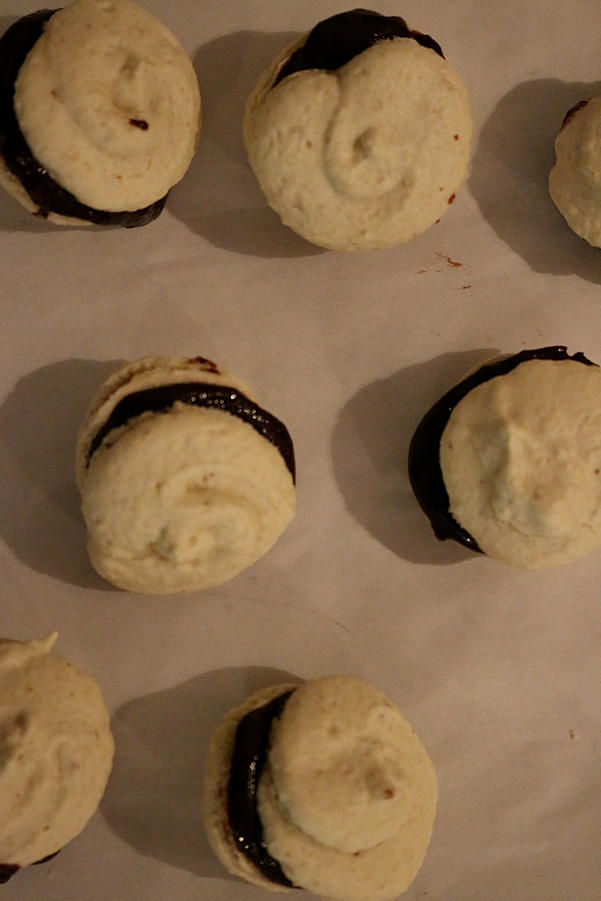
Macarons are light, French clouds of heaven. Although it’s a delicious option to add flavor to your macarons (and switch up your fillings!), this recipe is the basic edition. Hopefully, my macaron expertise will grow this summer into flattened tops and fluffier filling.

Recipe:

  • 2/3 cup almond flour

  • 1 cup confectioners’ sugar

  • 2 large egg whites, room temperature

  • 1/4 cup granulated sugar

Step 1:

Preheat your oven to 350 degrees. Combine almond flour and confectioners’ sugar with a whisk, and then press through a fine strainer. This step is important! You need to make sure the sugar and almond flour are distributed evenly throughout, as well as aerated for the perfect consistency. Press all those lil clumpies out.

Step 2:

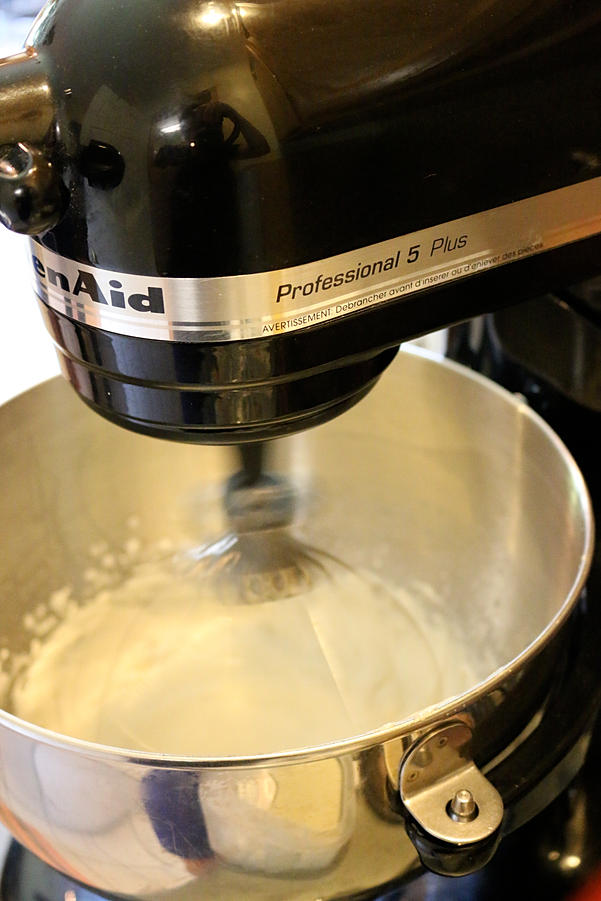
Wipe out a mixing bowl (make sure there’s no oil in there – hands or otherwise!) and start beating those egg whites. Martha suggests beating on medium speed for two minutes, medium-high for two minutes, and high for two minutes.

I say, beat ’em on high for all the minutes. Either way, they’re gonna form stiff peaks. When you’re at the medium-high stage, also known as the mostly-whipped-but-not-quite-stiff stage, add the sugar in gradually. Whip egg whites into glossy, stiff peaks. If you’d like, add a few drops of food coloring to spice up the looks of those babies.

Step 3:

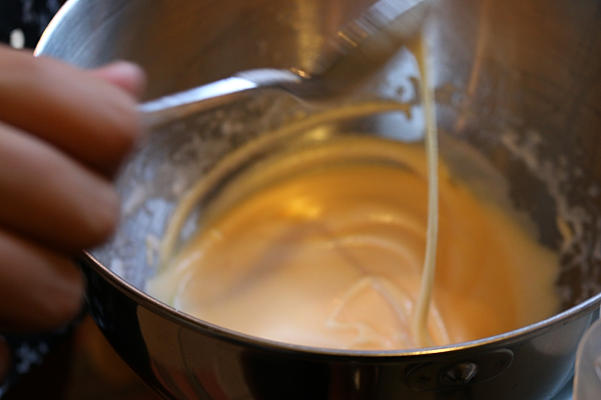
Add the almond flour/sugar combination on top of the egg whites, folding them into the mixture gently with a spatula. Martha says to “repeat just until batter flows like lava.” This is the most ridiculous cooking analogy when applied to macarons. Does Martha know what lava flows like? Because, it is certainly not like the batter of these macarons. It’ll be a thick-ish liquid that flows just like macaron mixture should. Try 40-ish spatula strokes.

Step 4:

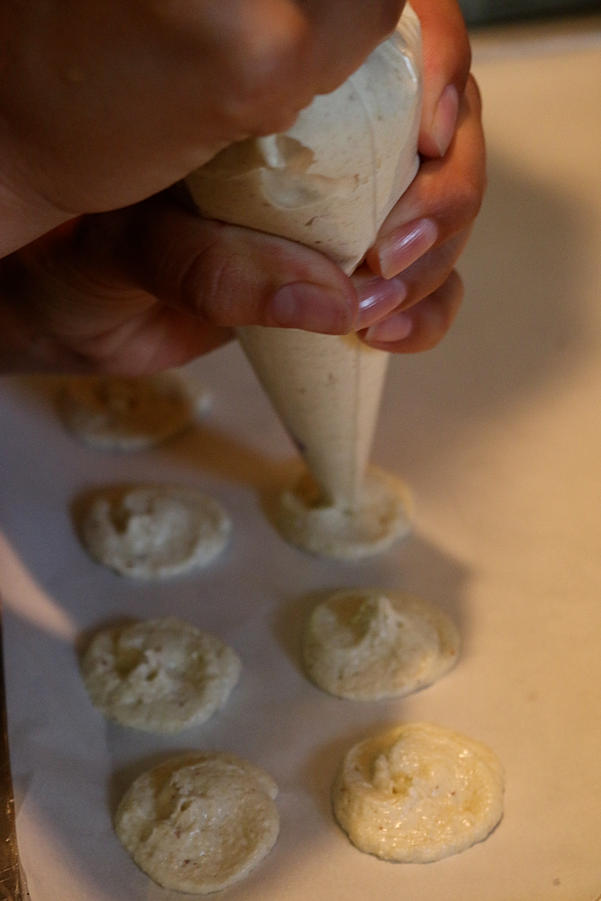
Put down parchment paper on your baking sheet. Transfer your non-lava mixture into a piping bag. Try using a tall glass cup to make this transfer easier! Pipe the macaron batter into 3/4″ round circles. Space them about 1″ apart. Try not to leave little tops on your macarons – this is always my downfall.

Once you’ve piped all the batter out, smack that baking sheet against the counter three or four times to get the air bubbles out. I also leave the pans on the counters for 20-ish minutes so the macarons can form a skin on the tops. Bake for 13-ish minutes, until risen and set. Let the macarons cool before piping in filling.

Good Gosh, What A Ganache!

Take a cup of heavy whipping cream and slowly melt in 9 oz. chopped semi-sweet chocolate. Slowly is key – if the cream gets too hot, the chocolate will break up and then you’ll have to start over. It doesn’t need to be hot, just warm it enough to gradually melt the chocolate.

And voila! Ganache. Wait til this delicious mixture cools before spooning it into your mouth. And, of course, piping it into the middle of your macarons. Enjoy!