The Joy of a Life Without Worry

I am a self-proclaimed worry wart. I am always worrying. Whether it’s about school, the future, my friends, my family, or worrying about the fact that I worry so much, my life has been a constant struggle of worrying about the past or worrying about the future – which is an incredibly unhealthy and unfulfilling way of life.

About six months ago, I decided that worrying was probably not the way I wanted to spend the next eighty years of my life. Not only does it take a toll on your emotions and burdens your heart, worrying mentally breaks me down – just think of all the brain power I’ve wasted!

My decision to live without worry came about as a sort of revelation to me that I didn’t actually need to be in control of my life. The age-old adage assumes that now (being your twenties) is the time for you to go and figure everything out and find your perfect job and your perfect match and plan ahead and start a family and live just like an adult should live. However, taking a step back from these worldly pressures, I’ve come to the conclusion that if at any point in my life I’m allowed to not have it all figured out, that time is now.

Living a life of worry stops us from experiencing the current moment, because we’re always hyper-aware of the future. If I’m always thinking about how my life will be five years from now, worrying that it may not be where I want it to be, I’ll be missing out on the present (which, ironically, I would probably end up worrying about how many years I spent worrying that I’ll never get back).

I found this Bible verse that really illuminated this revelation:

Matthew 6:27 NIV

“Can any one of you by worrying add a single hour to your life?”

Answer: Absolutely not. We dwell in these thoughts and anxieties hoping that they will change the outcome of our situations. In reality, our lives will not get any longer. These are the hours for creating relationships, making memories, living for the beauty of life – not to be wasted in a vicious and self-deprecating cycle of worry.

And the beauty of this story? We have the hope and reassurance that our lives are in the hands of Someone much, much more powerful than we are. Regardless of how much we worry about what’s going to happen, our paths are not our own.

What a relief, right? In making the decision to worry less, I’ve already felt a remarkably lighter load on my heart.

Plus, now I’ve got all this time, brain space and emotional room to devote myself to the things that really matter – like living whole-heartedly in the present.

PR in Sports: Lebron’s Letter in Sports Illustrated

As someone who doesn’t usually follow professional basketball, I wasn’t sure I’d be able to do this post justice. However, one thing in which I am confident is how public relations is used to effectively market individuals and businesses. NBA superstar and international sports icon Lebron James recently wrote an eloquent letter about his choice to rejoin the Cleveland Cavaliers that had PR professionals shaking their heads in awe.

In 2010, Lebron announced he’d be leaving Cleveland after seven seasons with the Cavs in a highly publicized ESPN interview. His major decision – which infuriated many – was broadcasted through an incredibly effective, trusted sports outlet. Everyone knew about the choice. I wasn’t even in the country at this point, much less a basketball fan, and I knew that Lebron was joining the Miami Heat.

Last Friday, James announced that he was coming back to Cleveland through a very personal, professional letter he released as told to Sports Illustrated’s Lee Jenkins. In the letter, he addressed his heart for Ohio, his decision in originally choosing Miami, as well as his choice to return to the Cavs. The letter is straight-to-the-point, low-key, and tells the audience exactly what they need to hear.

And, this letter was released through one of the most trusted print media sources for sports’ news. This reminds us: when you have crucial information to distribute -particularly when it affects numerous stakeholders – you should head towards packing a wallop with an incredibly reliable source.

This method of releasing information is very unlike the PR strategies of today. The letter is starkly different from James’ announcement in 2010 – no millions watching, no bombardment of questions, no chaotic circus of media frenzy.

Lebron’s letter was probably the smartest PR choice for his announcement. His letter addresses that he takes the move seriously, and plans to work hard in his new position. “I’m not having a press conference or a party,” the letter says. “After this, it’s time to get to work.”

The letter also demonstrates the athlete’s willingness to be transparent in the communication of his decision. He anticipated the arguments that his departure was based on tension with teammates, to which he responds: “I’m doing this essay because I want an opportunity to explain myself uninterrupted. I don’t want anyone thinking: He and Erik Spoelstra didn’t get along. … He and Riles didn’t get along. … The Heat couldn’t put the right team together. That’s absolutely not true.”

Finally, James grabs us with pathos. According to the letter, his return to the Cavaliers goes beyond his desire to play basketball. Instead, the choice focuses on what he calls his “responsibility to lead” – his desire to help shape the community into what he believes the future may hold.

Lebron combines factual information with an emotionally charged appeal. His choice to submit his decision via letter not only boosted the traffic to the Sports Illustrated site, but also allowed him to shape his words and opinions without the pressure of a media circus.

The lessons?

1. Give your audience what they want.

2. Be practical.

3. Be transparent.

4. Be strategic in your message.

Perhaps you too will garner over 35,000 Facebook shares.

11 Ways to Use Your Online Skills for Good

According to Yahoo! News, Americans spend on average 23 hours per week online – emailing, gaming, poking, prodding, crushin’ candy, blogging, farming, blocking, tumbling… you get the point. We spend an incredible amount of time in our digital society.

What if a fraction of this time was directed towards making a difference? In this post, I’ve included 10 different social action websites that are worth looking into. Do you have ten minutes to put your phone down? Did you know answering a trivia question allows you to (freely!) donate ten grains of rice? Having used a few myself, I can vouch for the simplicity of these good deeds.

And to think you just keep refreshing your Twitter feed.

1. DoSomething.org

This website is geared towards involving teens. It calls us to various campaigns – fighting sexism, cracking down on texting and driving, donating jeans for homeless teens, conserving water, even finding homes for shelter pets – simply by completing the challenges they suggest. And, if you take a picture of yourself completing that challenge, you’ll be entered into a $4000 scholarship drawing. Pretty simple, right?

One really great DoSomething challenge I participated in was sending a Valentine’s Day card to a lonely senior. DoSomething sent me an address, and all I had to do was make a card. This may sound like something small, but can you imagine the ripple effect of a million teens sending a million cards? It doesn’t cost anything, and it could make a huge difference in someone’s life.

2. FreeRice.com

This is a cool one! If you’re like me and your family is tired of hearing you yell out the answers to Jeopardy trivia, check out FreeRice.com. This website allows you to answer trivia questions and win rice. Yep, win rice. For every question you answer correctly, FreeRice sponsors will donate ten grains of rice to the World Food Programme. The site even keeps track of how many bowls, bags, and tons of rice you’ve generated with your trivia answers.

“But I’m awful at trivia!” LIES. We’re talking: “holy means: A) gentle B) not many C) accurate D) sacred” here people! You can even change your subject – humanities, geography, English, science, math… there is even SAT prep. Seriously.

This is a great site to play around on if you’re just laying in front of the television. Hardly any effort, and rice gets donated to hungry earthlings. Win-win. And, if you’re into this kinda thing, you can even form groups to work together or work your way onto the rice leader score board.

3. UNICEF Tap Project

I’m not going to lie to you, sometimes I think I may have a cellphone addiction. So, this UNICEF Tap Project is good for my soul – my desire for good outweighs my desire to refresh Instagram. The Tap Project is a smart phone campaign. For every ten minutes you don’t touch your phone (and believe me, it senses if you’re trying to sneak it – I’ve tried) you provide a child with clean water for the day. And, if you keep going, more and more children can have more and more clean water – something that is TRULY an essential.

Once you finally crack (just kidding, we know you have to take calls from your mom sometime) you can make a donation to UNICEF for as little as $5 – an amount that provides a child with clean water for 200 days.

This would be a great way to spend a dinner, whether it’s with your family or out to eat with your friends. Not only are you providing children with clean water – or multiple children, if everyone’s doing it at once – you’re also getting some real relationship time.

4. Apathy Is Boring

Canadians, this one’s for you! The Apathy Is Boring page invites Canadian citizens to immerse themselves in politics to be aware of what they’re supporting. Instead of being one of those people who kinda knows what’s going on, you can be the one that people always refer questions to at the dinner table. The site gives unbiased information on different political parties, allows you to make your very own “call to action” petition, and gives election reminders.

The page also encourages individuals to encourage the youth in their communities, providing training tools, videos, and media to bring up a generation of culturally-aware young’uns.

5. Earthjustice

Earthjustice is an international, non-profit law firm speaking up for our sweet Earth. This organization is dedicated to creating a healthy living environment for all people, protecting the Earth’s natural resources, and defending organizations such as the Wilderness Society at no cost.

So what can you do? The Earthjustice page allows individuals to get in on the action. The site shares information about the various projects on which they’re working and then creates petitions that you can sign, depending on how you feel about saving the coral reef. You can also subscribe to the Earthjustice page to keep up with what’s going on.

6. Groupon Grassroots

I know I love Groupon. Groupon Grassroots is like Groupon for social causes. You can create your own cause, find local causes around you, and choose where your loyalties lie. So far, Groupon Grassroots has kickstarted over 1500 campaigns raising over 8 million dollars in support. You can “purchase” donations to support campaigns you care about locally – many of which go directly back into your community. There’s even a Groupon Grassroots blog where you can tell your story, share your experience with an organization, or rally support for your passion. Grouponning for change, for the win.

7. PifWorld

Similar to Groupon Grassroots, PifWorld allows you to choose a cause you feel strongly about, donate or support this cause, and share the cause with your friends. However, it’s on a much broader scale. Instead of your local school, PifWorld allows you to support across oceans.

Essentially, it’s a platform that allows you to garner support for what you love. If there’s something you’d like to begin, start your own fundraiser and create a non-profit page. And, if you want, PifWorld will even tell your Twitter followers about it. There is a blog, but I can’t read Dutch.

8. Spot.us 

Communication majors unite! Spot.us is a website dedicated to community-funded reporting. The public works with Spot.us to choose topics that may be under-reported or overlooked, and this community of journalists with open hearts and sharp typing skills can pursue the story for themselves. Currently, the site has over 22,000 contributors and over 110 publishing partners.

This site is funded partially by American Public Media and partially the public, but is currently not accepting any new proposals or contributors. I’ll post more when Spot.us is refreshed!

9. Help From Home

Hopefully you’ve stuck with me this long, because this site is one of the coolest things I’ve ever stumbled across on the internet. Help From Home is a site based on the concept of microvolunteering – small volunteering projects performed by millions of people. 100% Pajama pant friendly. Help From Home lets you choose your choice of action. Do you want to play games that donate money to charity? Do you have a minute to send a free eCard? You can even put an add-on to your Firefox browser that’ll save printer ink –> paper –> trees (and indirectly money) and takes literally 30 seconds.

There are hundreds of these little tasks that allow you to volunteer from your bed at virtually no cost to you, taking anywhere from 30 seconds to 30 minutes. Of course, donating to your favorite cause is always an option.

10. Kiva

Whoever came up with Kiva is brilliant. You’re looking at a site that empowers people globally through as cheap as a $25 loan. How does it work? You lend to someone in need, and when they reach their goal, they pay you back. It’s beautiful.

Let me share an example:

Elena is a 42-year old widower from the Philippines. She is looking for a loan of $350 to restock her small store with basic commodities so that she can provide for her four children. She is 7% on the way to her goal – someone’s already donated $25 to her cause. Kiva provides a repayment schedule, and Elena works towards saving up for future consumption so that she can build a sustainable lifestyle for herself and her kids. If you’d like to donate to Elena’s Kiva loan, click here.

If you have $25 sitting in a bank account somewhere that you could share with someone in a third world country, Kiva is definitely the route to go. And, you get to become a part of these awesome life stories.

11. Social Actions

Finally, the motherload. Social Actions is a site that provides the links and information to all the other sites you may be looking for. Browse campaigns, webpages or fundraisers. You can even create petitions, give loans, and discover social action apps.

I hope you found something that interests you! Whatever you choose, remember that those ten minutes (and all those definitions you learned in 8th grade) could better our world. Be proactive.


Martha’s Macarons with Chocolate Ganache

(Photos by Anna Wilt)

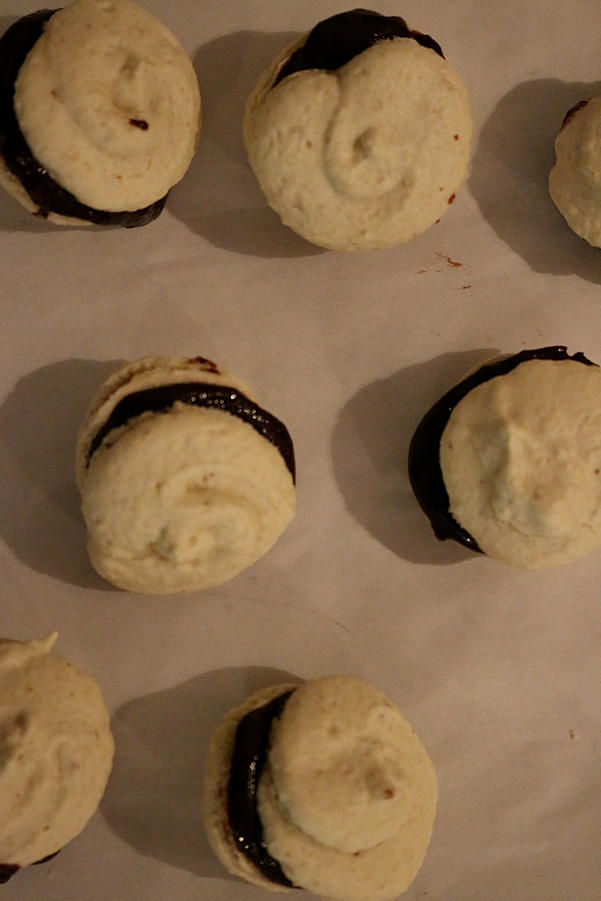
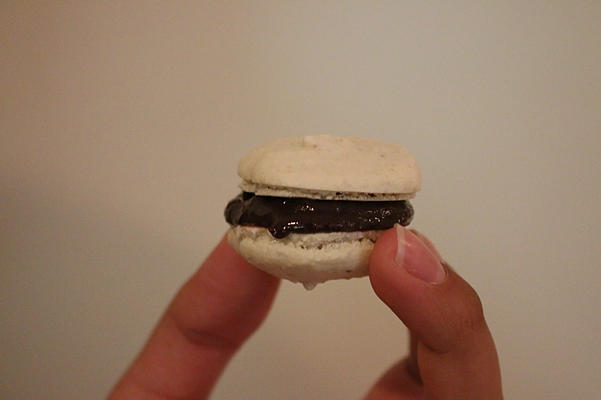
In honor of my long-lasting love for macarons, I’d like to present to you a recent macaron recipe that led to an empty plate with few crumbs.

I’ve loved experimenting with recipes and tweaking favorites for years, but my love of cooking stems from generations of family (my grandmother, my mother and my aunt & uncle) following recipes. They’ve technically mastered how to perfect ganaches, make lamajouns, and braid kourinjahs.

These macarons are inspired by Martha Stewart’s classic recipe, but I also got to witness a ganache (my first ganache experience!) blossom under the talented hand of my Uncle Ed.

Macarons are light, French clouds of heaven. Although it’s a delicious option to add flavor to your macarons (and switch up your fillings!), this recipe is the basic edition. Hopefully, my macaron expertise will grow this summer into flattened tops and fluffier filling.

Recipe:

  • 2/3 cup almond flour

  • 1 cup confectioners’ sugar

  • 2 large egg whites, room temperature

  • 1/4 cup granulated sugar

Step 1:

Preheat your oven to 350 degrees. Combine almond flour and confectioners’ sugar with a whisk, and then press through a fine strainer. This step is important! You need to make sure the sugar and almond flour are distributed evenly throughout, as well as aerated for the perfect consistency. Press all those lil clumpies out.

Step 2:

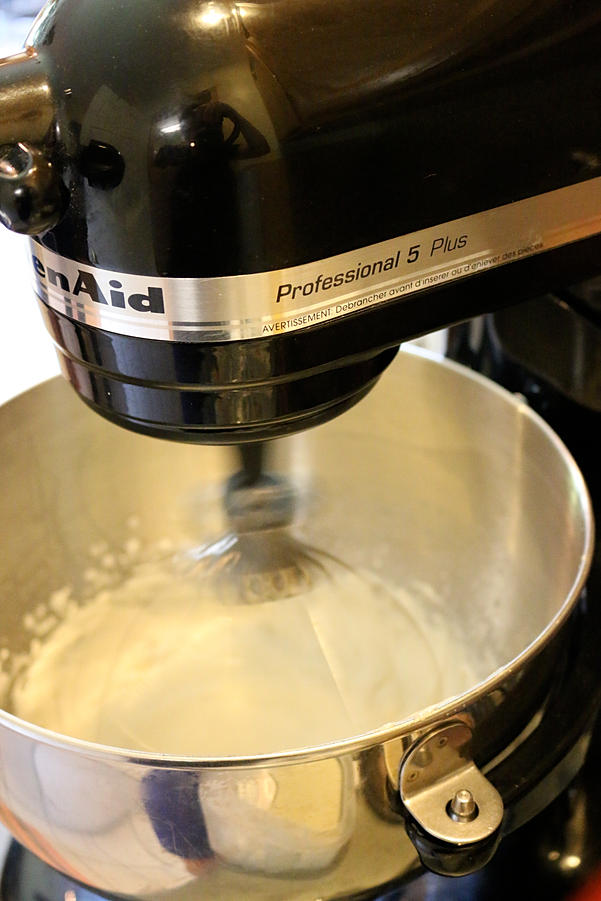
Wipe out a mixing bowl (make sure there’s no oil in there – hands or otherwise!) and start beating those egg whites. Martha suggests beating on medium speed for two minutes, medium-high for two minutes, and high for two minutes.

I say, beat ’em on high for all the minutes. Either way, they’re gonna form stiff peaks. When you’re at the medium-high stage, also known as the mostly-whipped-but-not-quite-stiff stage, add the sugar in gradually. Whip egg whites into glossy, stiff peaks. If you’d like, add a few drops of food coloring to spice up the looks of those babies.

Step 3:

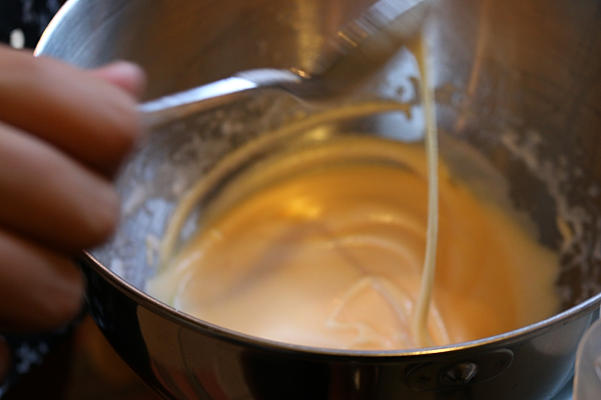
Add the almond flour/sugar combination on top of the egg whites, folding them into the mixture gently with a spatula. Martha says to “repeat just until batter flows like lava.” This is the most ridiculous cooking analogy when applied to macarons. Does Martha know what lava flows like? Because, it is certainly not like the batter of these macarons. It’ll be a thick-ish liquid that flows just like macaron mixture should. Try 40-ish spatula strokes.

Step 4:

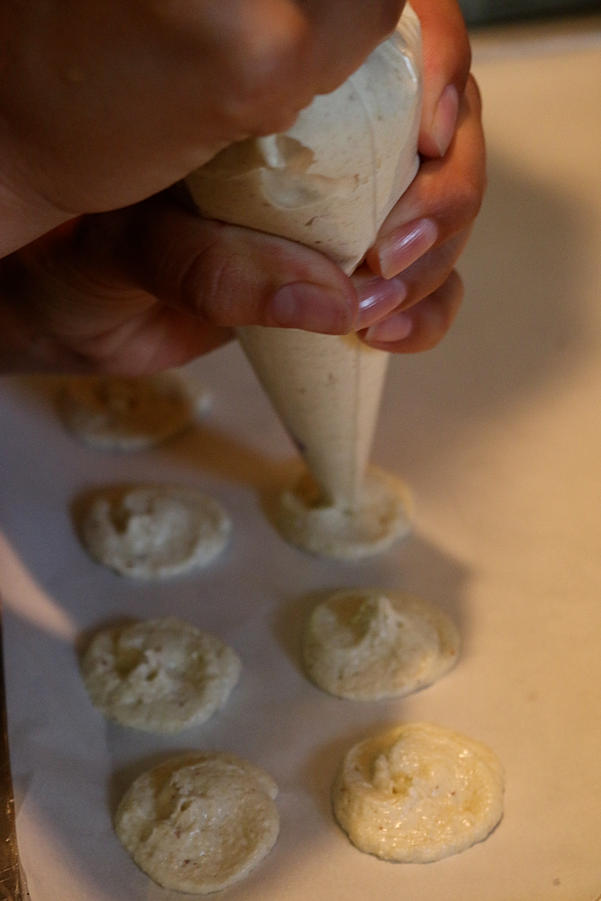
Put down parchment paper on your baking sheet. Transfer your non-lava mixture into a piping bag. Try using a tall glass cup to make this transfer easier! Pipe the macaron batter into 3/4″ round circles. Space them about 1″ apart. Try not to leave little tops on your macarons – this is always my downfall.

Once you’ve piped all the batter out, smack that baking sheet against the counter three or four times to get the air bubbles out. I also leave the pans on the counters for 20-ish minutes so the macarons can form a skin on the tops. Bake for 13-ish minutes, until risen and set. Let the macarons cool before piping in filling.

Good Gosh, What A Ganache!

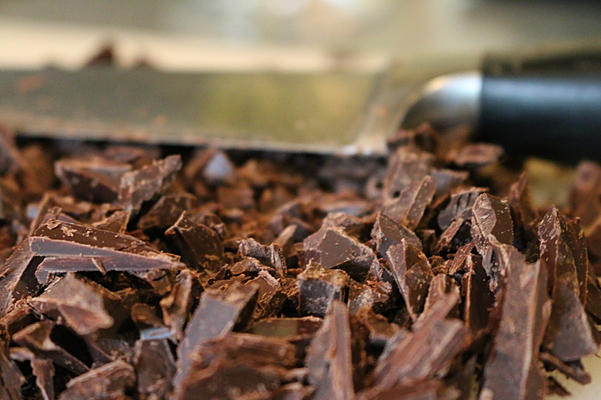
Take a cup of heavy whipping cream and slowly melt in 9 oz. chopped semi-sweet chocolate. Slowly is key – if the cream gets too hot, the chocolate will break up and then you’ll have to start over. It doesn’t need to be hot, just warm it enough to gradually melt the chocolate.

And voila! Ganache. Wait til this delicious mixture cools before spooning it into your mouth. And, of course, piping it into the middle of your macarons. Enjoy!

The Twitter Generation

Twitter, tweeting, retweeting, and tweedos have engulfed our society. If you’re a business – or simply trying to market yourself as the product – Twitter can be absolutely, posi-tweetly beneficial to your success.

Question: How do we stand out from the other millions of tweedos trying to bombard our timelines with feelings, thoughts, and pictures of what they had for lunch?

Answer: You are unique! You already stand out! But really, your tweets should be divided into two different categories – direct responses and tweet engagement.

Direct response tweeting is getting straight to the point. You may have heard the old adage, “if you don’t ask, you don’t get.” This applies to social media platforms too. Around 20% of your tweets (so, if you’re the kind of tweeter with 10,000 tweets, that’s 2000 tweets) should be you asking for what you want. If you’re a business, this means directly selling to your consumers. Add direct links to your products or special promo codes – just drive customers to your site.

What if you’re just trying to market yourself? Use these two thousand tweets to build yourself as a brand. Post links to your favorite blog, give your professional opinion on an important issue, or share an article you found interesting. Give your audience the impression that you take life seriously 20% of the time.

The other 8000 of your tweets should be building your followers’ interest in who you are. Be creative and thoughtful about your desired tweet reputation. What do you want to be known for? Hopefully you don’t bombard your page with scam links. What do you want your followers’ impression to be? This can be via picture, popular conversation, YouTube link, you name it. Engage when companies do that whole, “which would you choose?” bit. Get that Twitter handle out there. Put on your big boy feathers.

These are just a few ideas that could help you out with your Twitter presence. If you are consistent with your tweet engagement (that means you have to log on more than once a year…) and post things that people care about, you’ll have a stronger following base. It’s that simple.

Follow me on Twitter @abbiwilt!

Happy Social Media Birthday!

In honor of my twenty-first birthday, I’ve decided to post on behalf of all the Instagram birthday collages and Facebook posts that have changed birthdays for Generation Y/Z.

I read an interesting post by Grant Roth on birthday collages and what they mean to teens and young adults. In the article, he argues against the idea that we love posting on people’s walls simply because we want the publicity that a birthday post provides – not everyone can see a text between two people.

Roth says that while this may be true for some people, posting a birthday collage on Instagram is more about showing others why you love someone – an heartfelt expression of love for a technologically-savvy generation. We don’t simply want others to think of us as good people, we actually want to be good people.

I completely agree. As a generation, we communicate and express ourselves not through journaling in a notebook (although kudos to those who have the dedication to do this!) but rather posting on Twitter, sharing photos on Instagram and statusing on Facebook. Phone calls are now emails, and the internet allows us to think about someone, message them online, and refresh an old connection in a few clicks.

What about the birthday collages for people who aren’t on Instagram? On Fathers Day, I always see collages lovingly compiled for fathers everywhere – many of whom will never actually see the post. Do we post because we want others to think we’re thoughtful people? I revert back to Roth’s original idea – we express our love through what we know. We want others to know about the important aspects of our lives, such as how much we love our fathers. For this reason, I post collages without reservation.

So, to those that feel as though a birthday wish on Facebook once a year is a superficial notion of friendship, I’d like to argue that, at our different stages of life, we express who we are and how we love through these social media platforms – especially for myself as a communication student. This is the reason each individual posting deserves individual attention. When we consider that each posting is the expression of a heart, it brings much more meaning into our timelines.

One time, I attended a workshop with a career advisor who told me that communications professionals pay attention to whether or not you respond to every Facebook post you receive on your birthday. This shows if you are thoughtful and intentional with your communication skills. This is a quality valued specifically in the communication industry that’s stuck with me through the years. Professionals gauge whether or not we care based on how we respond – express ourselves – via social media.

Now don’t get me wrong – I very much appreciate those who I get to see in person on my birthday and who thoughtfully type out birthday text messages for me – I’m honored to be close enough (geographically) to receive these sorts of wishes. And, sometimes, we have the good fortune to thank someone for these wishes via phone, text or high-five.

However, social media platforms connect people over thousands of miles. For these Facebooking, Tweeting, and Instagramming individuals, I appreciate every post that I’ve gotten wishing me a happy birthday, and am working at getting better to respond to each and every individual expression of care.

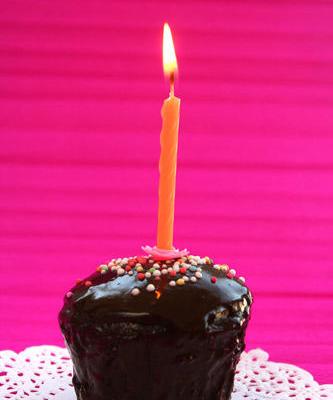
Off to eat cake!

xo

The Perfect Interview Drink

You probably read the title of this post and thought, “What on earth is this girl talking about? Interview drink? What?”

Truth of the matter is that I have actually thought about writing a post on interview drinks many a time, usually in the precise moment that I’m meeting a future employer over coffee or sitting in a reception area when the receptionist offers me something to drink.

I think which drink you choose in your interview really tells a lot about who you are. And, unfortunately, coffee breath could break your interview chances.

Are These Beans Fair Trade?

We all know these people. Maybe we are these people. Dedicated to their favorite roast, never settling for cheap blends. My sister is one of these people. She’s a diehard.

Coffee is a decent interview drink, because you won’t be burping or gulping (hopefully!). But, we must keep in mind that interviews are often in close quarters. And, coffee breath has been the downfall of many suited professionals (I don’t know if that’s exactly true, but I assume it to be the case…).

Coffee breath isn’t easy to get rid of, either. Then, you start feeling self-conscious of your espresso-exhaling, which directly affects the impression of your future employer. “Why is she covering her mouth? Why won’t she make eye contact? Why is she always rummaging through her purse for gum?”

Moral of the story: Don’t sabotage your self-confidence. Coffee is not the best interview drink.

Excuse Me, Do You Have Flavored Perrier?

I have to make a confession – this was me. I am an avid seltzer water consumer. So, when I went in for my interview at the coffee shop (and knowing coffee was not the right choice), I decided to go the sophisticated bottled water route. Perrier is harmless, right? WRONG.

The magic of seltzer water is in those beautiful little luscious bubbles, making you feel like you are enjoying a crisp champagne in the middle of the day and just bein’ a classy lady. But it’s those lil’ bubbles that will TAKE YOU DOWN.

If you haven’t picked up what I’m putting down, let me make it clear for you: Perrier will make you burp. “What’s your greatest strength?” “Burp.” “How could you contribute to this company?” “Burpity Burp.”

If your employer isn’t completely turned off to you by your apparent lack of manners (although we know this isn’t the case, the Perrier made you do it!), they probably won’t be able to understand your answers. Listen, I just don’t want your top-selling quality to be burping the alphabet.

Moral of the story: Skip the Perrier and its devil classy bubbles.

I’d Just Like A Water, Please

If you’re not an adventurous kinda person, I recommend going with plain ol’ water. True, the waiter won’t think much of you, but water is a safe choice.

Unless you’re me, and you drink six glasses in one sitting with a bendy straw.

Don’t slurp it down. Water won’t sabotage your breath or make you burp, but if you consume an obscene amount because you’re nervous and you use the straw as a way to avoid eye contact, I’d pass. Tap water can be your friend, but it also can get everywhere, sweat everywhere, and lead to myriad bathroom breaks.

Moral of the story: Water’s good. I’d avoid cups and straws, but bottled water is one of the safest interview drinks out there.

Hot Tea, Chaps?

I admit, I’m biased. My family has been drinking tea for years, and I grew up on hot cups by the fire. Regardless of my personal attachment, I have come to the conclusion that hot tea is the best interview drink out there. It’s sophisticated,

First of all, tea’s made with water. Remember him? The breath-saving burp-free friend.

Secondly, your interviewer won’t think you’re boring. It’s not just plain water, it’s flavored water that’s warmed up – screams class.

Thirdly, tea is delicious. You can sip pleasantly, nod inquisitively, and discuss that sales pitch you presented in your last company that brought in five new clients.

Fourthly, tea is relatively cheap at coffee shops, and easy to make. You’re not high maintenance. You fit in well. You refill the water cooler. You invite your work friends over for dinner. You’re a good person.

Finally, tea is calming. No more high-strung caffeinated conversations (tea has much less caffeine than coffee), unpleasant stomach cramps, embarrassing burps, or low self-confidence – tea brings a pleasing warmth to the table.

Who knows, maybe they’ll even hire you on the spot.

An Open Letter To Print Media

Dear Print Media,

As a PR student, the first thing that people tell me is that you’ve already died. Then, I have to tell them that I just saw you this morning, and they get defensive. And this is why, Print Media, I’m here to advocate for you.

You’ve already changed communication. Since the early days of Benjamin Harris’ Publick Occurences, you’ve been rockin’ our world. Instead of having to hear the “facts” from Aunt Nelly, we can read words in print that have (hopefully!) been double checked by people who care about you.

You’ve changed the way we absorb news. We still get magazines, read books, and (shock!) subscribe to papers. Now, we can find this print media on our tablets – reading books and magazines without ever physically flipping a page. Personally, I don’t believe this to be a negative progression. You’re growing and expanding, and embracing a modern world is a difficult transition to make.

Print Media, you’re being revolutionized. Journalists can no longer skim by with questionable facts – we have to fight to make sure we’re getting the truth out there, especially since TV can pick up a story in seconds, and people can watch videos online. We’re loyal, Print Media, because newspaper clippings on refrigerators will never get old, and communities celebrate tradition.

In the next five years, you may find yourself faced with the difficulty that children have grown up with iPads. However, you’ll flourish in knowing that people enjoy the tangible and the credible. Anyone can write a blog, but not everyone can publish articles. Your audience may dwindle slightly, but only to become more targeted. As a communication student, I know that targeting equals better advertising (meaning money)! Plus, you’ve got Sunday cartoons.

Sincerely,

A Girl Who Still Wears Newspaper Hats