
http://thedailysouth.southernliving.com/2015/06/05/diy-doughnut-wedding-favors-and-free-download/
Author: Abbi Wilt
Day 2: Good Morning, Alabama!

Yesterday was my orientation at Southern Living. I can’t even describe the splendor of this building – imagine every great thing you’d want in a house packed into a five-story mirrored glass building with a creek running through it and a waterfall outside the door. And, the Cooking Light test kitchen made the whole place smell like shortbread.
We sat in on a panel with some of the top Time Inc. execs, met our managers, and were thrown into the craziness of magazine editorial work. Here are some photos I snapped from the building tour.
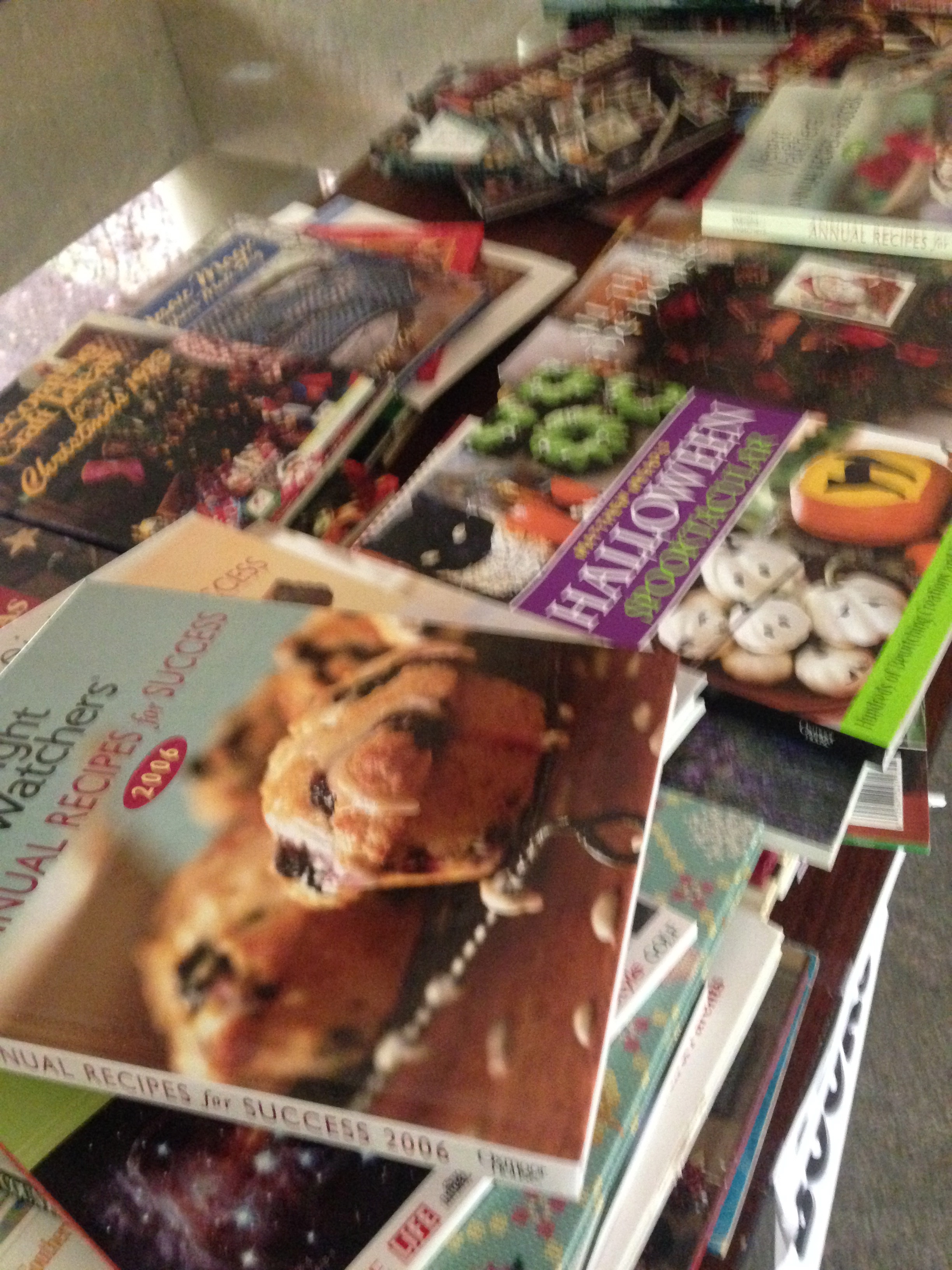
Southern Living Test Kitchen

Oh, unlimited cooking utensils? No big.

There are shelves upon shelves of antique and handcrafted bowls that are organized by color. Literally rows of beautiful cake plates waiting to be photographed.










Pretty nice view, eh?

________________________________________________________________________________________________
Today was my second day at Southern Living but my first official full-blown work day! What a whirlwind!
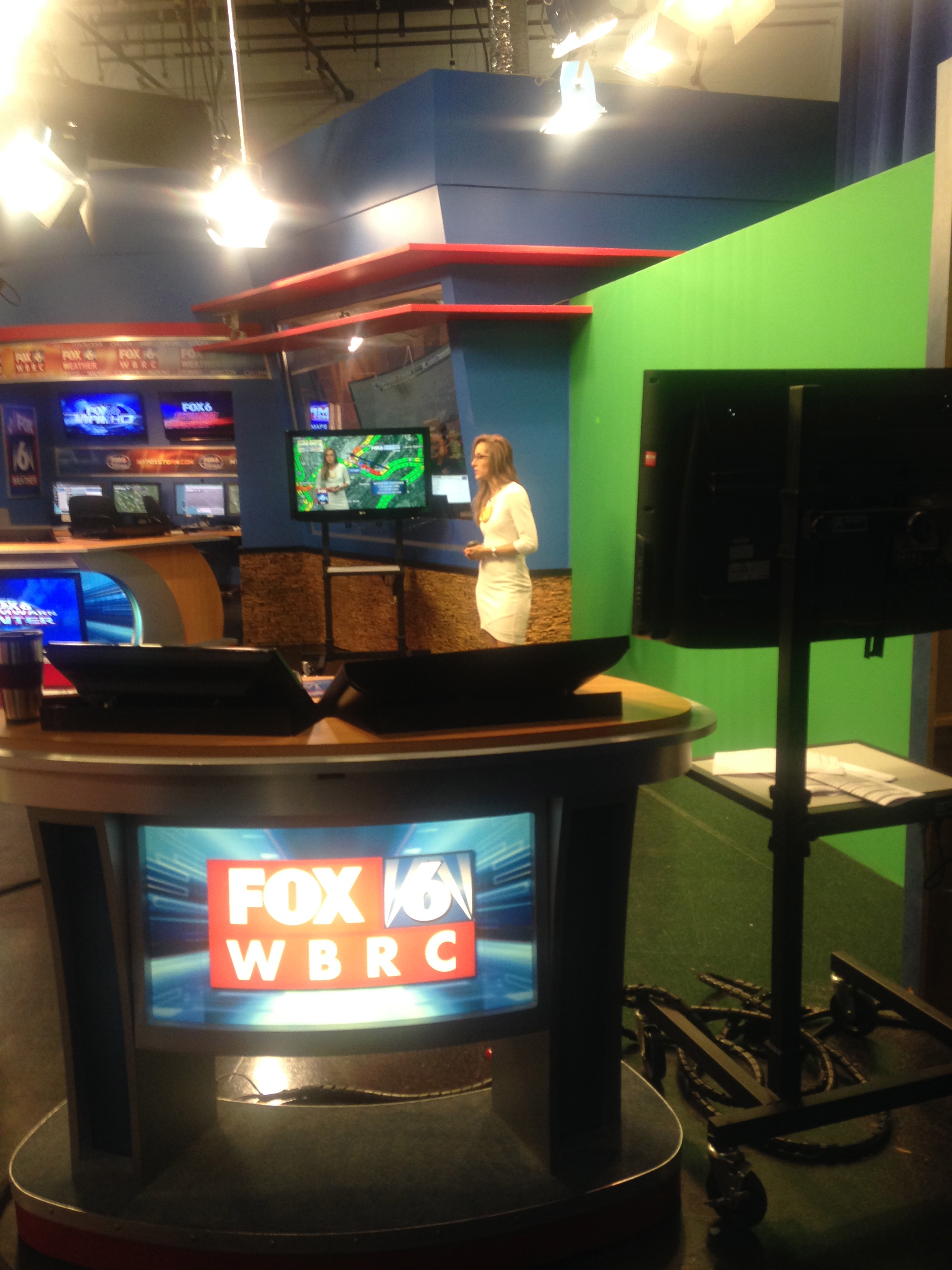
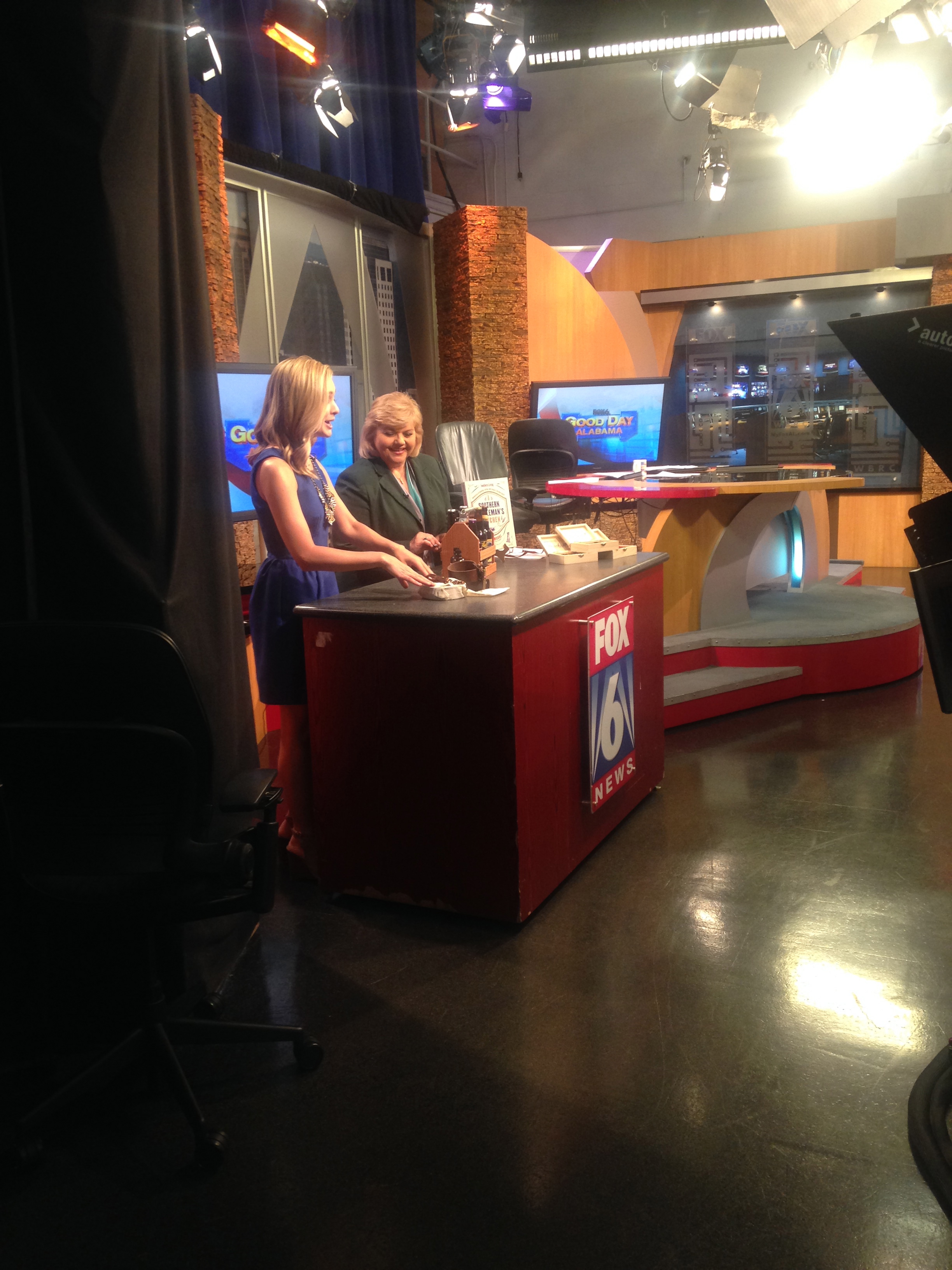
As my first big-girl task, I got to shadow my boss, Associate Editor Ashley Williams, as she spoke on the Good Morning Alabama newscast about Southern Living’s best Father’s Day gift ideas. Check out these unique twists on Father’s Day here. Apparently, adulthood includes some early mornings and some afternoon yawns.
However, this early morning came with an incredible view.



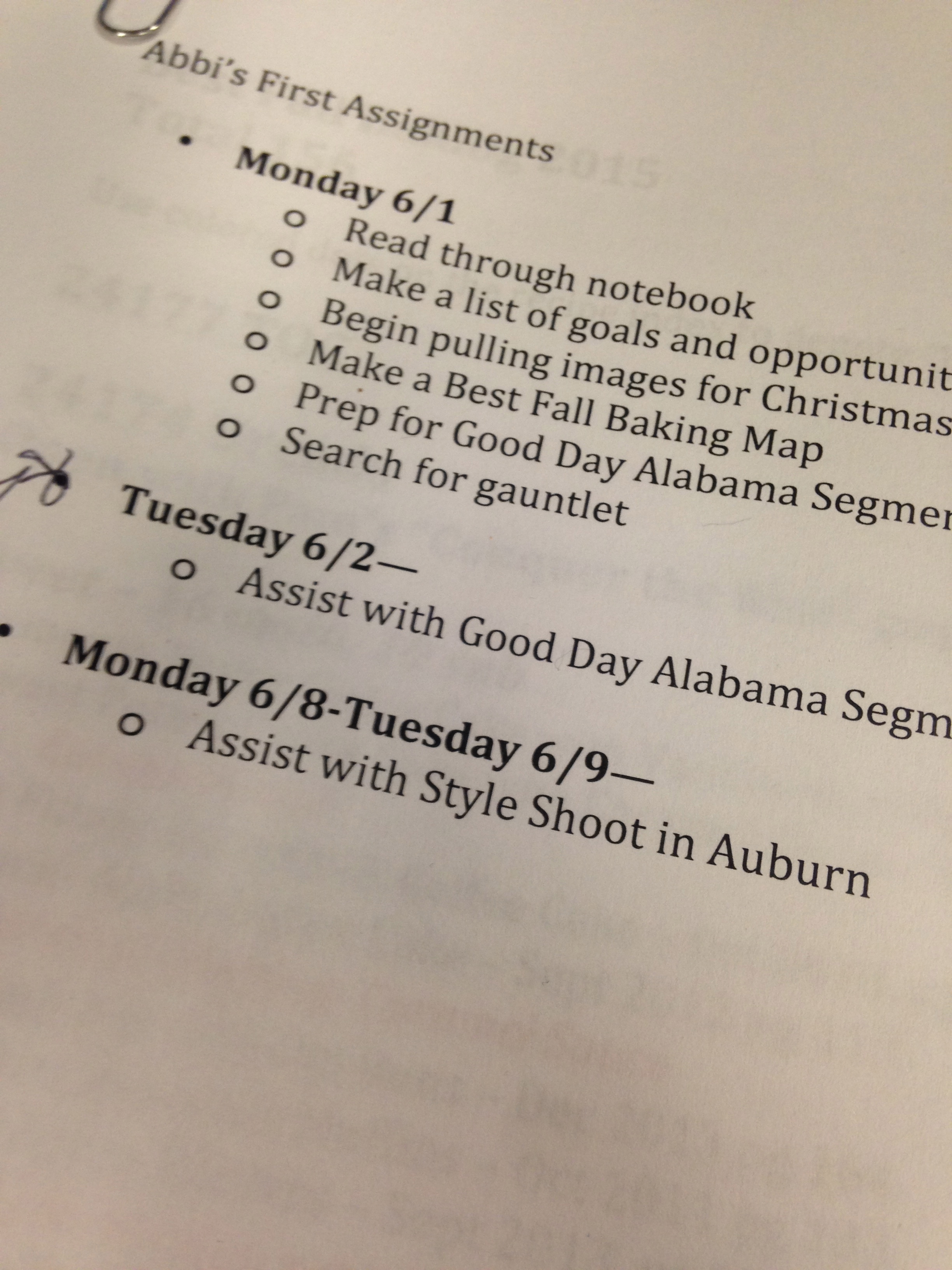
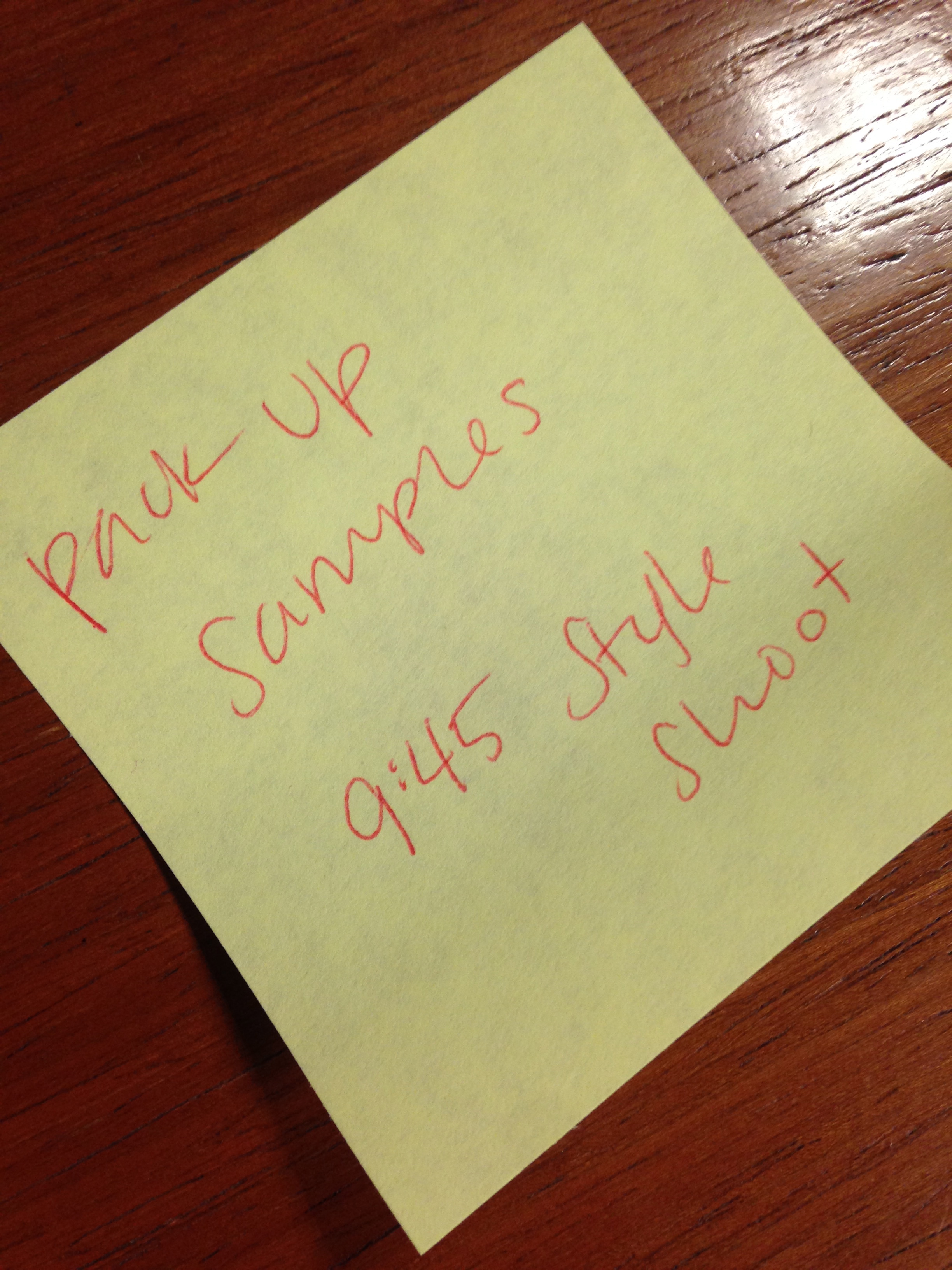
After the news segment, I got to check out a style shoot. Who would’ve thought that I would get to have stickies with tasks like these?! Be on the lookout for these pants in a few months…

Until next time,
Abbi
The Lone Explorer
Day 1 in Birmingham, Alabama.
First thought: No one would know if I died.
Today I decided to go on a little adventure. This adventure was the equivalent of me finding the location of all the places I will hope to visit in the future: the Riverchase Galleria, Wal-Mart, a few gyms, the downtown, and, of course, the fastest route to the Southern Progress building, home of Southern Living magazine.

Place 1: My new place of habitation! I will be staying with a couple (both marketing gurus and former Southern Living employees) in the Hoover neighborhood of Birmingham. Aside from the unbearable humidity, I’m loving the closet size of my new room.


Place 2: My lifelong dream. A few jokes have been shared lately about the Canadian taking up residence in the editorial department of Southern Living… but this Can-American is ready to turn full Southern belle. I am so excited to work in this MASSIVE building (hidden away like a top-secret government hideout, as per Josh…) that houses multiple magazines on a 28-acre campus next to Samford University. Tomorrow, my fellowship begins!



Place 3: Downtown Birmingham. This historically and culturally-rich city has a mix of ethnically diverse restaurants (including African, India, Italian and Mediterranean), gorgeous steel skyscrapers, high-rises covered in mirrored glass windows, an old railroad yard turned playground/walking park, a minor-league baseball field and the University of Alabama at Birmingham – complete with student parking, a huge children’s hospital, multiple housing complexes and a university bookstore. Downtown Birmingham is to be continued, as per the adventures that are to come!


Place 4: The Riverchase Galleria. This mall is no Cool Springs, but definitely has the largest Forever 21 I’ve ever seen. It’s one of those stores where you walk in, feel immediately overwhelmed that there is an entire section devoted to shoes (those of you familiar with good ol’ 21 know that they’re usually grouped in with the necklaces!), take 45 minutes just walking in a circle not knowing which part to go through first, and then leave empty handed when you realize that there is no chance you have it together enough to limit yourself to only going through 1/50 of the store.
As more exploring arises, more details will be shared. Until next time!
The “A” Word

We always talk about adventure as being this wonderful, soul-quenching feeling that fills your heart with joy and wonder.
This week, I graduated from university. My next “adventure” will be moving down to Birmingham, Alabama, living with strangers, and working with one of the most well-known magazines in the South. We call it an adventure when it’s something new, exciting or unusual. What about the other end of change?
It’s so easy to say you want to do something that pushes you out of your comfort zone. On paper, it sounds great. We look up to people who travel around and move to new places. In reality, it’s not fun. It’s scary, it makes your stomach hurt and it makes you really uncomfortable. I don’t think I’ve ever been so anxious in my life.
On my graduation cap, I wrote, “Not all who wander are lost.” On one hand, this is very true in my life. Wandering – whether in spirit or adventure – sounds exciting. It is something that brings experience, growth and character. It enriches your cultural awareness and allows you to meet new people. What it doesn’t say, however, is, “Most who wander are terrified.”
A friend of mine recently pulled this type of “adventure” and moved out to the West Coast alone. When I asked her how she did it, her advice was to not be afraid to do things alone. She said that it will certainly be uncomfortable, but you have to explore alone, not be afraid to talk to strangers (sorry, Mom!) and go places by yourself. I imagine myself sitting at Sunday Brunch for one. We will see.
Are Group Projects Worth It In College?

When you enter college, you meet lots of different people. Some people are type A (i.e., Abbi Wilt), some people are team supporters, and some people are just in college to get the degree without the work.
There will be a few of each of these people in every group project, unless you have a professor that intentionally throws the slackers together to see who emerges victorious. I’ve never been in this situation before, because I’m terrible at slacking. No really, I’ve tried to slack before and it doesn’t sit well with me.
Freshman year, your professor throws you into a group project under the explanation that you “will have to work with different types of people some day, so you may as well practice now.” The first group project, okay. I understand this concept. The second group project, okay. The third group project, okay…
Let’s say each of your professors gives you one group project per semester. At five classes a semester, this equals about 10 group projects per year. Over the course of my four years of college, I’ve probably been part of 35 group projects. Do you know how many successful groups I’ve had? Let me share with you – two. Two out of 35. This equals a success rate of 5%. This translates into a 95% unsuccessful rate of group projects.
After the fifth group project, I found myself in a dark pattern – one that sucked life from my soul when the words “Find a group!” were uttered in the classroom. As if I did not already know I was different than the other kids when it came to academics.
For the sake of argument, I would like to present the reasons why I personally believe that group projects are the worst and do not contribute to becoming a well-rounded individual (other than, of course, stress and anger management).
MEETINGS.
No one has time for their own schedule, much less to deal with the schedule of four other people. I can’t tell you the number of times I’ve showed up at the library only to receive a string of “actually can’t make it today” texts. Well, gee. Glad we could get together.
And then, when meetings do occur, what is the appropriate amount of small talk before you get down to business? Do I seem controlling if I walk in and go right to work? Is delegating bossy? Can I mask my tendancy to lead long enough for these other members to think I’m not a completely psychotic perfectionist? Not only are meetings inconvient, but they are often unproductive. If one person is off their game, it throws off the whole group. And, chances are, no one wants to be there.
The other option that’s recently emerged is the online group for the online class. No, please, no. Don’t put this on your students. We hate it when we actually have the chance to work together. Why on earth would I enjoy emailing back and forth, and back, and back, and back again with no answer? This is not fun for anyone.
There’s always that one person with the excuse – whether it be a pet dying or a grandmother’s surgery or an out-of-town wedding. Coupled with the student who disappears for the entire last half of the semester (and yes, this has happened to me) – your group is set up to fail.
I ALREADY KNOW I’M NERDY.
Unfortunately, it’s still not cool to be smart. Maybe some day, but certainly not today. As the one who usually ends up with most of the work in the group project, I can guarantee that my overachieving self does not gain friends or popularity after working in a group project, unless those people didn’t want to actually do anything and I picked up their slack.
I know what it feels like to A) not have anyone want to work with you because you have an incredibly high standard of work, B) not have anyone want to work with you because they think you’re bossy C) have someone only join your group because they think it’s a free pass, and D) be made fun of because you’re known to be the nerdy one who cares too much.
None of the above are particularly enjoyable.
The other option is that the work is done, but it is full of errors. This is equally as frustrating, because then I feel as though it would take me about as much time to rewrite it as it would to edit out the errors. In these situations, I usually take on the role of having everyone send me their pieces prior to submission so that I can make sure it’s top notch.
I understand that this sounds controlling. I am not denying that this role is the easiest for me to take on when it comes to group projects. However, it is simply the result of wanting to do well in school and squeezing what I can from my education.
I DO NOT WANT TO BE AN ANGRY PERSON.
I have actually tried not to take control of a group project, just because I felt like slacking is a skill I should work on. Did it work? No. Instead of someone else in the group project taking the reins – because everyone should have a chance to work on their leadership skills – the project crashed and burned. What do I hate more than having to work with other people that don’t care? Having my name attached to sub-par work.
I think I would be remiss not to mention that I have been a part of one stellar group project. Why was this particular group great? We agreed on mutual deadlines, we did the work evenly, and we all cared about the grade we were getting. This has been my only case of a group who wasn’t just trying to slide by. If they were all like this, I’d be much more enthusiastic about participating.
I’m hoping that pursuing a career in which others are also passionate about their jobs, I will be able to work in teams that care about the work that emerges, rather than just skimming by for a passing grade.
However, if the work is already only being done in the confines of my own brain, I’d prefer for my name to be alone on the cover. Please, for the sake of the students that actually somewhat care about school and their academic successes, save me from the epidemic of group projects.
Sack The Black Slacks

Finding cute, professional clothes is not simple for women.
Men have it easy on this front. I heard a story about this one man who wore the exact same suit every day to work for his entire career, and no one said anything to him about it.
This would never happen with a woman. It’s not a button-up-and-tie-and-dress-pants deal. It’s hard to figure out what’s long enough, what goes together, what’s appropriate for the setting, etc. – nevertheless trying to find it in a comfortable option that’s cheap enough for a young professional.
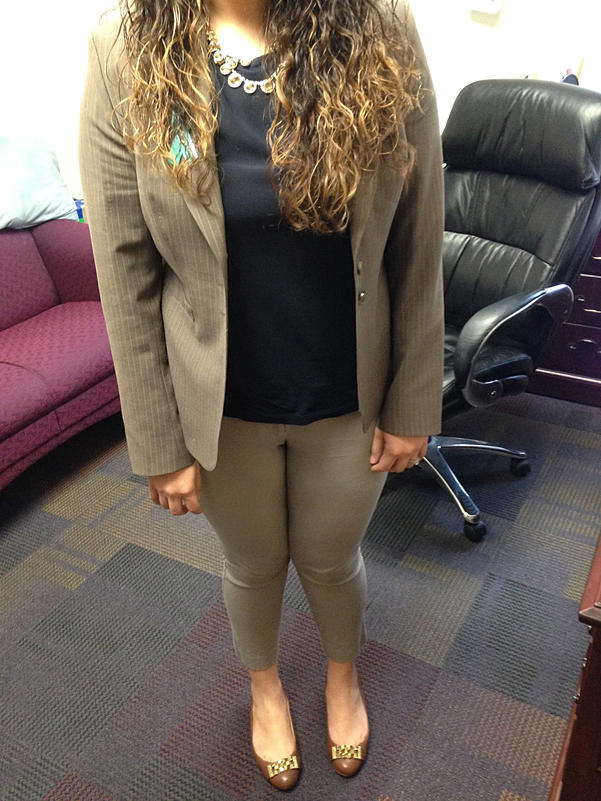
This whole subject stressed me out. Every time I went to dress for a professional occasion, I found myself reaching for the same three outfits, trying to remember which one I wore last that people would certainly remember versus one that I wore two times ago that people would only vaguely remember. It was rough.
For this reason, I started searching out cute and professional outfits from friends that were both adorable and appropriate – yet didn’t look too difficult to put together.
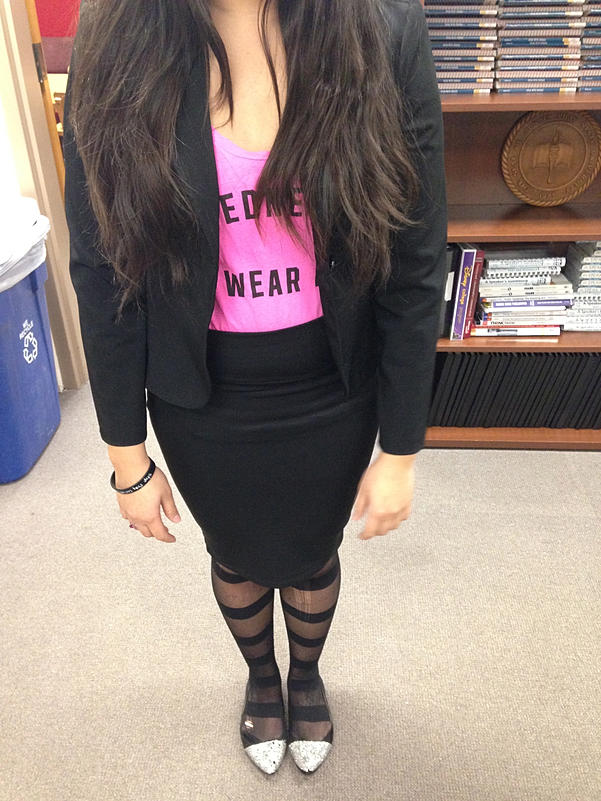
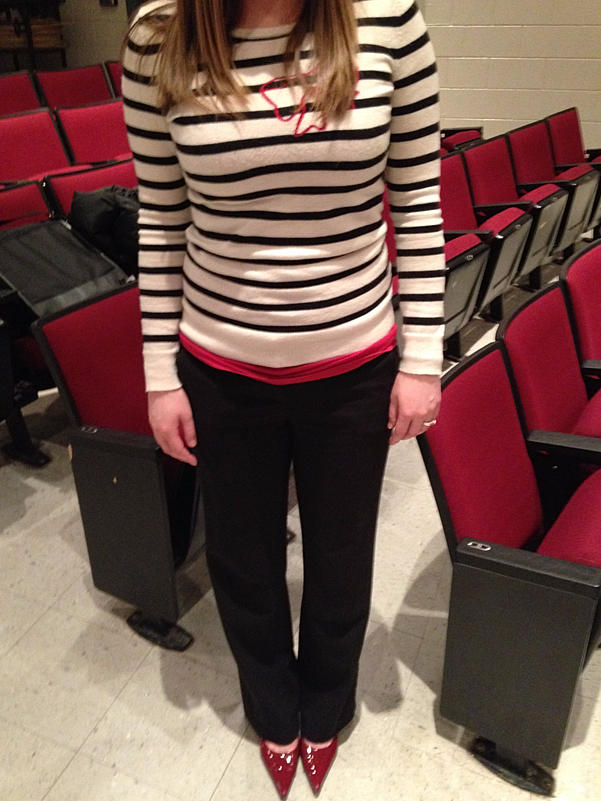
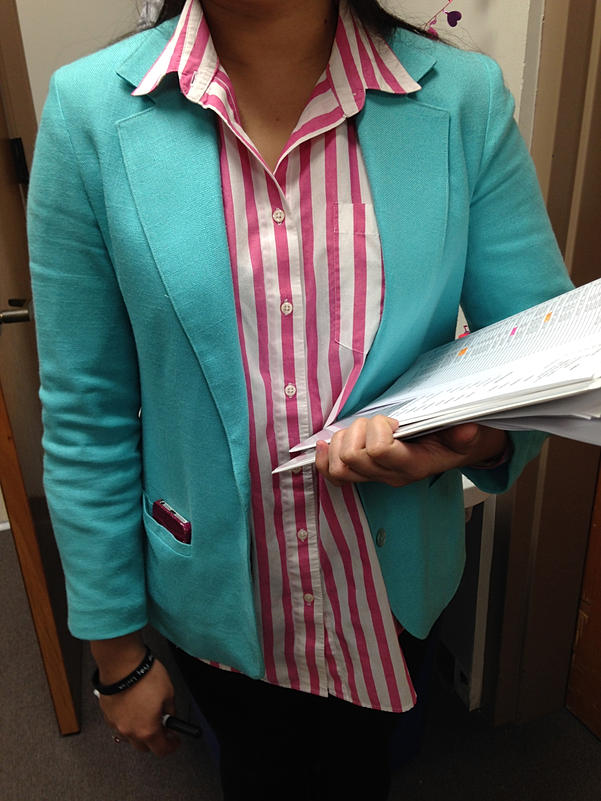
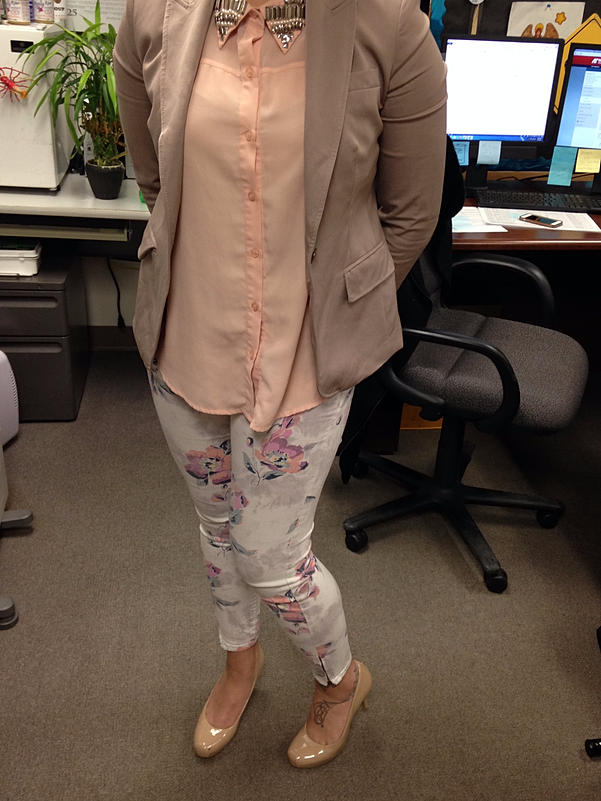
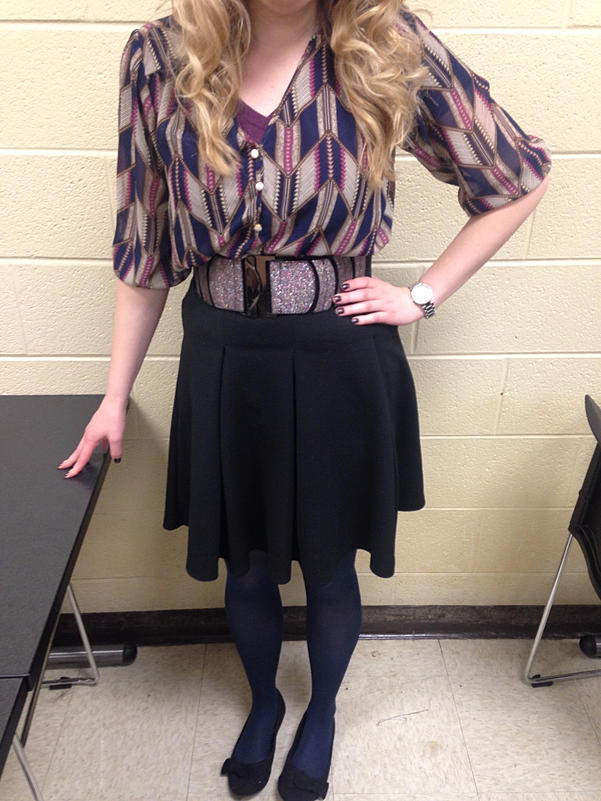
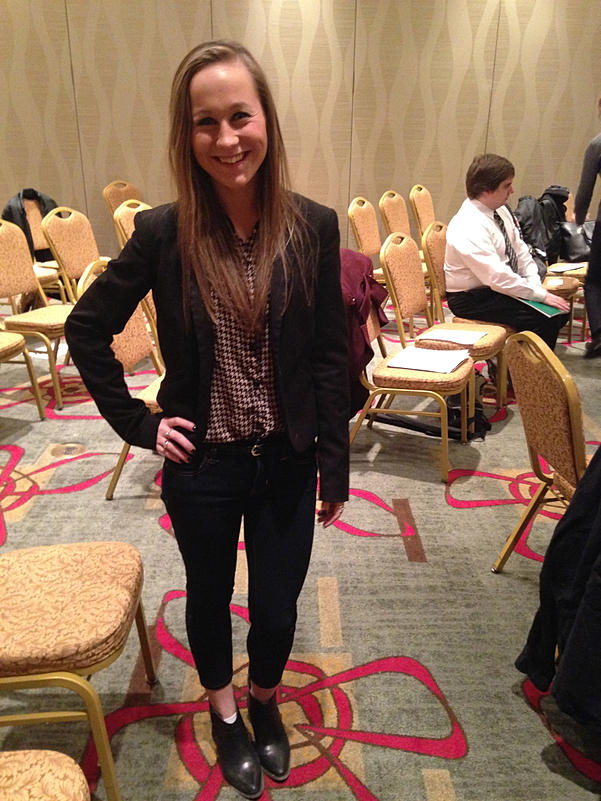
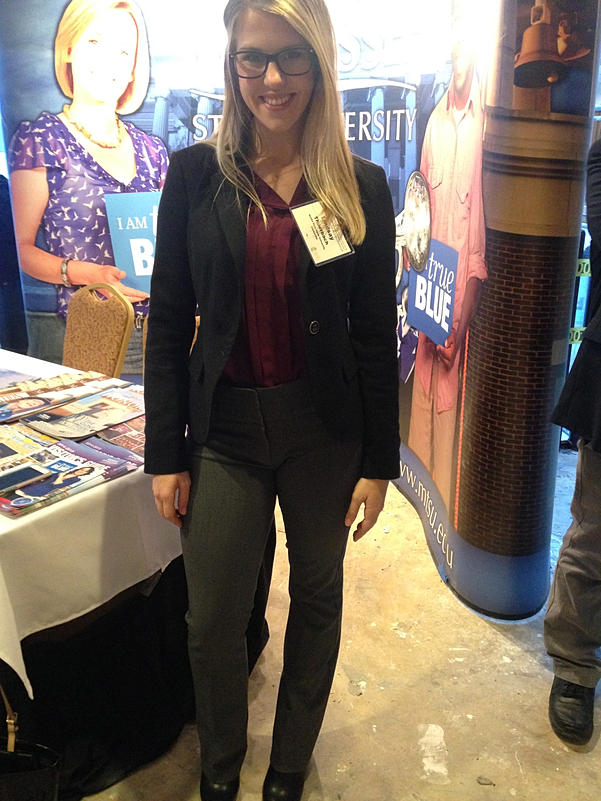
Although I’m not sure the costs on these specific super chic outfits, please refer to my last post about Goodwill and understand that you could totally make any of these outfits with some successful thrifting.
So what do these outfits have in common?
SIZE.
One easy way to be professional is to make sure your clothes fit you properly. It’s incredibly important. If you think it is cute and you want it to fit really badly and it doesn’t, then DO NOT buy it. Clothing that is too tight or dramatically too loose is generally unflattering and gives off a vibe that you didn’t really care enough to find the right size. This is something I struggle with specifically because Goodwill doesn’t have multiple size options for the really cute stuff. There will be other perfect shirts, I promise.

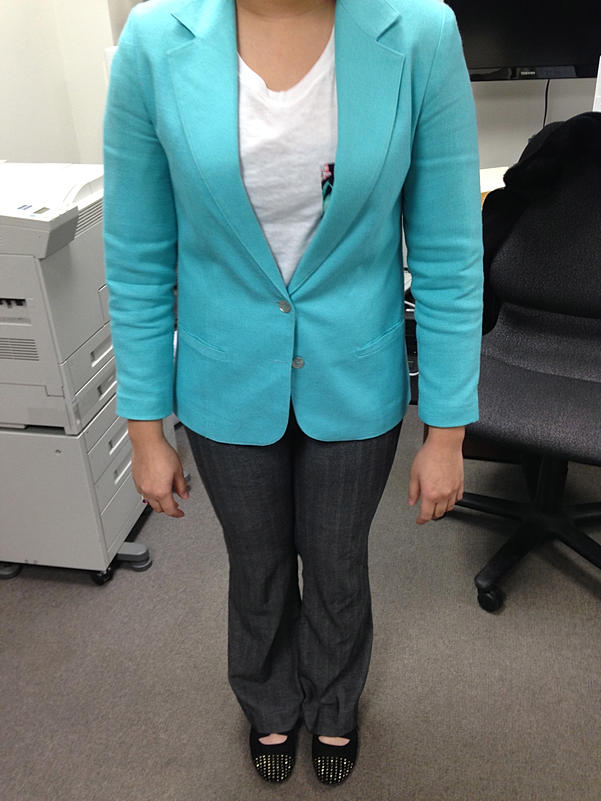
COLOR.
Being cute and professional doesn’t mean you can only wear shades of white and black and beige. In fact, the bold options of color can make you look more confident and less like you’re trying to blend in with the back wall. Don’t get me wrong – some strategic black and white does wonders for your figure – but don’t rely on it completely.
STYLE.
We each have our own “style” and level of comfort with different types of clothes. When it comes to style, you want to pick out clothing that will make you feel the most comfortable. When you feel the most comfortable (about yourself, not being the material of your pants!), you’ll be more likely to put your best self forward. This leads, again, to confidence. I have had times that I’ve put on an outfit that doesn’t really fit with the look I’m going for. The whole day, I felt self-conscious about my clothes and kept tugging on them – not cues of a successful professional.
Some rules are unspoken but still slightly expected – like not wearing mini skirts to the office. Try and keep your pencil skirt length to something you could wear to church.

PANTYHOSE/LEGGINGS.
This section may cause some ripples.
In my personal opinion, pantyhose isn’t always necessary when dressing professionally. In the past, it was almost mandatory that a woman wore pantyhose with her outfit. It’s a highly debated subject among female professionals (I did the research!) and about half believe it’s an outdated practice.
According to the articles I read, if a workplace has a “business casual” dress code, pantyhose is not necessary. However, if you are in a “business formal” environment, pantyhose are generally expected. Or, you could become the Owner/President/CEO of the company and make your own dress code. That’s my plan.
Unfortunately, in terms of dressing professionally, leggings are not pants. Now – I totally vouch for leggings as pants with casual dress, so no need to get defensive. However, for argument’s sake, leggings aren’t exactly clothing that scream: “I put a lot of thought into what I’m wearing today.”
HAIR.
This doesn’t technically fall into the outfit category, but I heard a tip once that I think could be important to share – because college doesn’t really cover the minute details of dressing professionally. Tip: it is never professional to show up to work with wet hair. This is a stinky rule, especially for those of us who like to sleep longer. Maybe shower an hour earlier than you’d usually get up and then fall back asleep on your wet hair. Or blow-dry it. Or shake your head in front of a fan for a few minutes.
I hope that some of these tips/outfits have inspired you to branch out further than black slacks. Thank you to all my friends/models who let me photograph their adorable style!
Abbi’s Pro Guide to Goodwill Shopping

I love Goodwill.
A lot of people ask me how I find the dedication to Goodwill as hard as I do, and usually they’re surprised that most of my wardrobe comes from a thrift store.
I buy shirts, pants, jeans, dresses, shoes, books and dishes at Goodwill. Whenever I talk to others about Goodwill, I’m always asked what my secret is to finding the clothes that I do. So, I would like to impart my Goodwill strategy with you.
TIP ONE.
First of all, find a Goodwill near you. This is key. If you’re going to brave it on the first Saturday of the month (1/2 off everything in the store!), make sure you dress in comfy, breathable clothes. You will be sweating by the end. Your pores will be filled with Goodwill. Your lungs will ache. I experienced this yesterday, and came away with a swelled throat. Plan accordingly.
TIP TWO.
Before you enter the Goodwill, mentally prepare yourself. You need a strategy. This may sound strange, but I visit the store in exactly the same order every time. Pants, sleeveless, short sleeved, long sleeved women, dresses, long sleeved men, shoes, home goods, books. Every time.
Although this can be adjusted if you specifically need something (which I generally don’t), make sure you hit up the sections in order of importance to you. If you don’t, someone will get the thing you wanted by the time you get there. If you’re all about the reward system (i.e., if you look through the pants first and then reward yourself with the dresses), you will need to reassign your priorities.
I’ve used the reward system. Depending on how busy the store is, someone will probably pick out the one Ann Taylor Loft tags-on lace shorts that should’ve belonged to you. Nothing is more frustrating than seeing another person walk by your aisle holding the perfect item on a hanger. And, it’s probably half off for that color sales tag, too.
TIP THREE.
No one is your friend. That woman you’re eyeing over the aisle is definitely going to find the one thing you can’t leave the store without so you need to be one step ahead of her. It’s every woman for herself. If you smell weakness, prey upon it. If she picks up a shirt you love and then thinks about it and puts it back… You grab that shirt. You can look at it later. Display dominance. Old ladies have a fiery side when it comes to deals. This is not a joke.
TIP FOUR.
If you only partially like it in the store, you sure as heck aren’t going to like it in real life. When you go to new clothing stores, the clothes always look better on you (like maybe +5) than they do in real life. At Goodwill, you’re looking at maybe a +1. Keep that in mind. All of the cute clothes are relatively cute – only cute after you’ve gone through eight racks of itchy sweaters that were last worn in the eighties. Don’t let the Goodwill blinders suck you in – stay strong in your style.
TIP FIVE.
When you approach the rack, you have to commit. Use those toned triceps to pull back the clothes enough that you can see the whole shirt without obstruction. No room? I physically pick up a handful of shirts and move them to another bar so I have room to look. I have pulled muscles this way. It’s part of the turf.
Generally, you can see the fabric of the material that you want to buy. However, there are hidden shirts that need love, too. I flip through every shirt in my size bracket to avoid this.
TIP SIX.
Speaking of size brackets, here’s a pro tip: start with the size you think you are, and then go through the mixed color shirts below and above that size. If they mislabeled the sizes, they’ll probably be in those multicolor sections. If you’ve got more time, I’d also suggest going through the additional colors of the sizes above and below. Yesterday, I found an adorable shirt in the XS section that was actually a large. Don’t give up hope; people make mistakes.
TIP SEVEN.
The Goodwill smell will always be there, and you’ll always feel like having an allergy attack after visiting for over thirty minutes. This is something you need to make peace with.
TIP EIGHT.
Give yourself plenty of time. No one really goes with me to Goodwill, based purely on the fact that I take about two hours and try on a significant portion of the store. I’m slightly jealous of whoever gets my fitting room after me, because I’ve taken the time to comb through all the good stuff.
TIP NINE.
All jokes aside, Goodwill shopping just takes a little bit of dedication. If you’re willing to get your hands dirty – and they may literally get dirty – you can find some great stuff. You can’t lightly brush through the shirts, you need to grasp them firmly. Without this quality, you will fail at Goodwill shopping. My sister hates Goodwill because she doesn’t want to touch clothes that others have warn. This is a surefire way to not find anything worth buying.
TIP TEN.
The shortest line is not always the fastest line. Case in point – yesterday I waited in the “shortest” line for one full hour while people in the longer line cycled through twice as quickly. It was painful to watch. If you’re really concerned about it, watch how fast the sales associate wraps the home goods in paper. This is directly connected to the line’s length.
I hope my tips help you along your Goodwill journey. Happy thrifting!
Which PR Campaign Hooked Us in 2014?
There are many companies that are stepping up their game when it comes to reputation management and public relations. That being said, it was the ALS Ice Bucket Challenge that really rocked our internet feeds this year.
The challenge was a viral hit – individuals would dump buckets of ice/ice water on his/her heads, post a video to social media and tag three friends. The individual would then make a donation to the ALS Association. That’s all it took.
A record-breaking $115 million in donations was recorded for the society, many made by new donors who had not previously donated to ALS. The Ice Bucket Challenge also got celebrities involved – famous stars including One Direction, Justin Bieber, Selena Gomez, Kate Upton, Leonardo DiCaprio, Henry Cavill, and many others also participated.
So why was this campaign so wildly successful? It was a viral movement that involved something somewhat extreme (dumping ice over your head) and making your friends do it, too. It didn’t take promotion from the ALS Association – the campaign drove itself. It cost practically nothing to the ALS Association, and gave us all a warm feeling about doing our part for the community.
It was big, it was for a good cause and it was selfless. The Challenge was covered in the news, and was a trend among youth and teens. Combined with the fact that you could laugh at your friends and replay a video unlimited times, the Challenge brought in 500% more donations than the ALS Association has seen the previous year.
Just like any good campaign, however, the ALS Ice Bucket Challenge had a few critics. Some called out individuals who were posting videos but not actually donating. Others complained that the campaign encouraged us to waste water. Others were injured in the process of making their videos. However, the good significantly outweighed the bad.
Fundraisers like this are changing the way that companies do business. Following the lead of the Ice Bucket Challenge, other nonprofits tried the same model to prompte their causes. Most notably was the “Feelin’ Nuts” campaign trying to encourage men to check themselves for testicular cancer. The campaign showed photos and videos of celebrities grabbing their crotches in public, hashtagged #feelingnuts and uploaded their media to the Feelin’ Nuts official site. However, this did not take off as well as the ALS Ice Bucket Challenge. Why was this similar campaign not as successful? For starters, it was only geared toward men. The ALS campaign included all participants, making it easy to share. Also, participants were not worried about sharing the hashtag “feelingnuts” so that their grandmothers on Facebook could see them. It excluded a large percentage of Internet users. It was clever, yes – but just having a clever slogan does not make a PR campaign.
ALS was fortunate to have the Internet on their side. With the help of humor and celebrities, the campaign raised a remarkable amount of money for the foundation. Sometimes, the best PR campaigns are the ones we don’t push – we let the consumers run with the idea.
What Exactly Do PR People Do?

If you’re not working at a big PR firm, are you even a PR pro?
We hear all about PR professionals getting positions in big PR firms, and most of the examples in our textbooks refer to pros who are working with large organizations in big cities making big waves. However, this is just not realistic for every student – there are simply not enough large PR firms to make it happen.
When I first began studying PR, I did feel this way. I thought that gaining a position with a large firm would be much more prestigious than working in another location. I think this, like I mentioned above, has a lot to do with the examples and work that we are exposed to while studying PR in university. If we tour firms, we tour large firms. If we hear about PR on the news, it’s usually about a large firm working on a large problem.
So what are the other options?
Something that we often overlook is the concept of working in a small, boutique PR firm – just as much a PR firm as one that would supports hundreds of clients. Especially in the South, there are hundreds of boutique PR firms that house 10-15 employees. Some are even smaller. When I interned with a boutique PR firm, Gray PR consisted of two hardworking employees. This is a great option. And, if PR is certainly what the chosen career path, a student could start their own PR firm.
Many organizations have some sort of PR representative, as well. This lessens the cost to the group if a crisis occurs. This would be another viable choice for a student working in PR. There are hundreds of thousands of organizations that would be looking to hire a Communication professional. The term ‘Communication Professional’ is key, here. Sometimes, the job you’re looking for does not come in the neat package of PR professional. It could have a different title. A student would be limiting themselves if they stuck only to jobs that contained “Public Relations” in the title.
Another option for a student studying PR would be working with an NGO or non-profit. Again, these titles might be slightly different than what you were hoping for. However, these organizations need a strong PR professional to lead the charge, as well. This may extend to media relations or other areas of communication; however, having experience in multiple communication areas will only increase your worth to the organization.
Currently, I am hoping to apply the knowledge I have learned in PR to a career in magazine editing. Although these two have seemingly little in common, having the PR background to understand campaigns, writing skills, advertising and crisis control would be only beneficial to an amateur editor.
As I mentioned, it’s getting over the title of PR professional that would be key to growth within a student’s career. Although large PR firms would be a great experience and likely a solid career, the other options cannot be discounted.
 Abigail Wilt